LogoLowBacklashGearbox
Start inquiry
WhatsApp
LogoLowBacklashGearbox

Trusted by Global OEM Partners. High-performance precision manufacturing for industrial motion systems.

Inquiry

[email protected]WhatsApp: +86 188 5797 1991
Products
  • All Product Series
  • Helical Planetary
  • Spur Planetary
  • Right Angle Planetary
  • Inline Planetary
  • Request Inquiry
Solutions
  • Industry Applications
  • OEM Customization
  • Cross-reference Tool
Resources
  • Resources Hub
  • Engineering Blog
  • FAQ
  • Contact Support
  • About Factory
Legal
  • Cookie Policy
  • Privacy Policy
  • Terms of Service
© 2026 LowBacklashGearbox. All Rights Reserved.|Backed by Linkup Ai Co., Ltd. Manufacturing delivered by the Advanced Manufacturing Division of Linkup Precision.
Hybrid tool + engineering report

2 Stage Speed Reducer Gearbox Design in PTC Creo

Run a quick design gate before you spend hours modeling: split the ratio, check Creo readiness, identify backlash and packaging risks, then use the report layer to decide what evidence is still missing.

Intent mode

do 50 / know 50

Tool boundary

4-80:1

Release caveat

CAD is not rating

Run the Creo design gateRead methodology
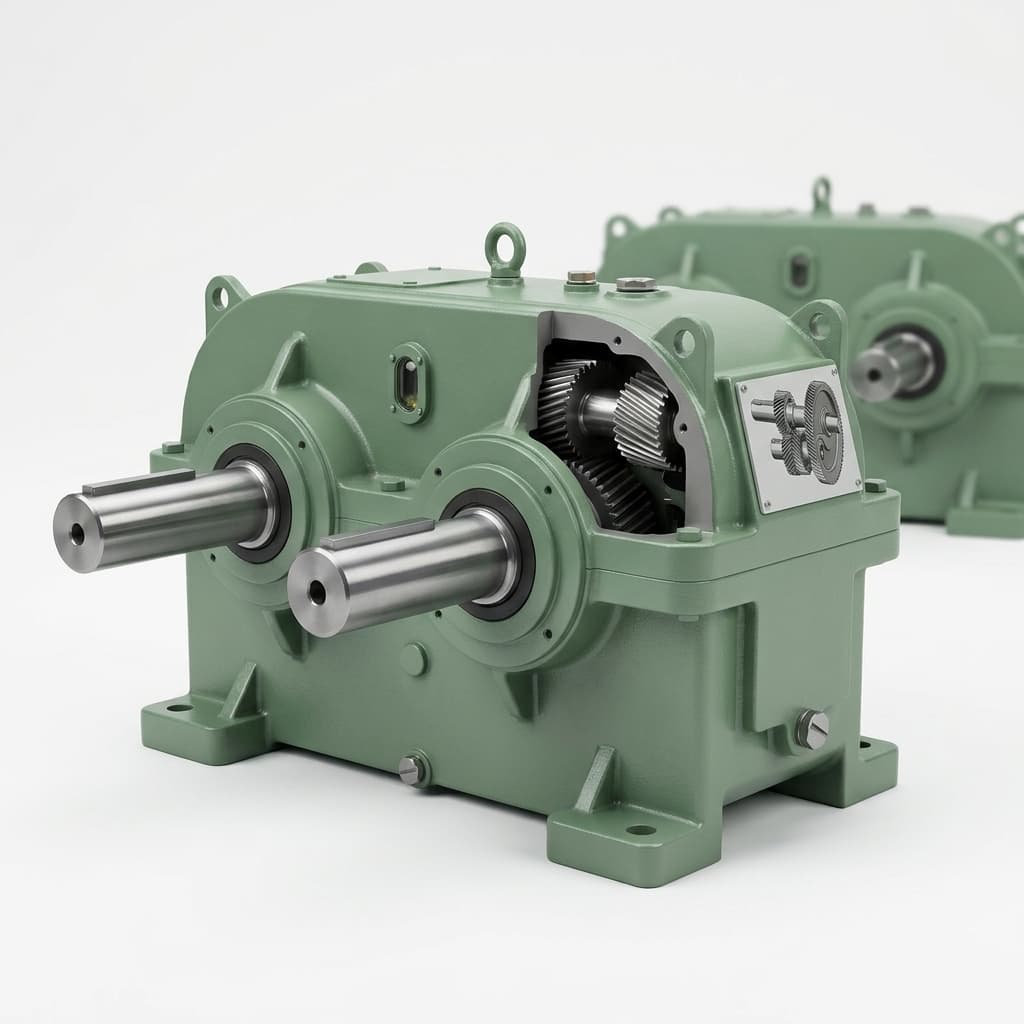
Double reduction helical gearbox used as the visual reference for a 2 stage speed reducer gearbox design in PTC Creo
Visual reference for the two mesh, shaft-layout, and manufacturability boundaries discussed in this Creo design gate.

Creo-ready reducer design gate

Check a 2 stage speed reducer gearbox design before modeling in PTC Creo

Enter ratio, speed, torque, backlash, and packaging constraints to get a stage split, Creo modeling path, risk status, and next action.

Result states

Ready: CAD gate can start
Review: evidence needed
Blocked: reset assumptions

Output is deterministic and directional. Use certified gear calculation, inspection, and supplier review before release.

No result yet.

Run the checker to receive ratio split, Creo modeling path, risk level, and next-step checklist.

Report summary

Core conclusions for Creo reducer modeling

The page is intentionally tool-first because the query implies someone wants to build a model. The report layer explains where that model is useful, where it fails, and what evidence closes the gap.

sqrt(i)

Start with a ratio gate, not tooth detail

A square-root stage split gives a stable first concept. Tooth counts and modules should follow packaging and manufacturability checks.

Evidence: Concept gate; needs gear rating evidence before release.

2 meshes

Creo checks velocity constraints, not tooth contact

PTC describes generic gear pairs as velocity constraints that are not based on model geometry, so they support kinematic intent rather than manufactured tooth behavior.

Evidence: PTC Creo Mechanism help, reviewed 2026-06-06.

<6 arcmin

Backlash is the release risk

Very low backlash targets demand tooth-thickness, center-distance, bearing-fit, assembly, and inspection evidence. A visual CAD clearance alone is not a manufactured guarantee.

Evidence: KHK backlash references + supplier inspection data.

4-80:1

Formal rating has a narrower scope than CAD

ISO 6336-1:2019 covers spur/helical involute gear load-capacity calculation principles, but excludes several deterioration modes and needs experienced factor selection.

Evidence: ISO 6336-1:2019 public scope, reviewed 2026-06-06.

Two-stage ratio splitinputintermediateoutputsplit near sqrt(total ratio)

Ratio split first

Creo workflowlayoutgearsmotiondrawingskeleton-driven model reduces late rework

Skeleton workflow

Backlash risk curvetighter arcminevidence needed

Backlash evidence

Evidence stackCAD layoutMotion checkGear ratingSupplier review

Release evidence

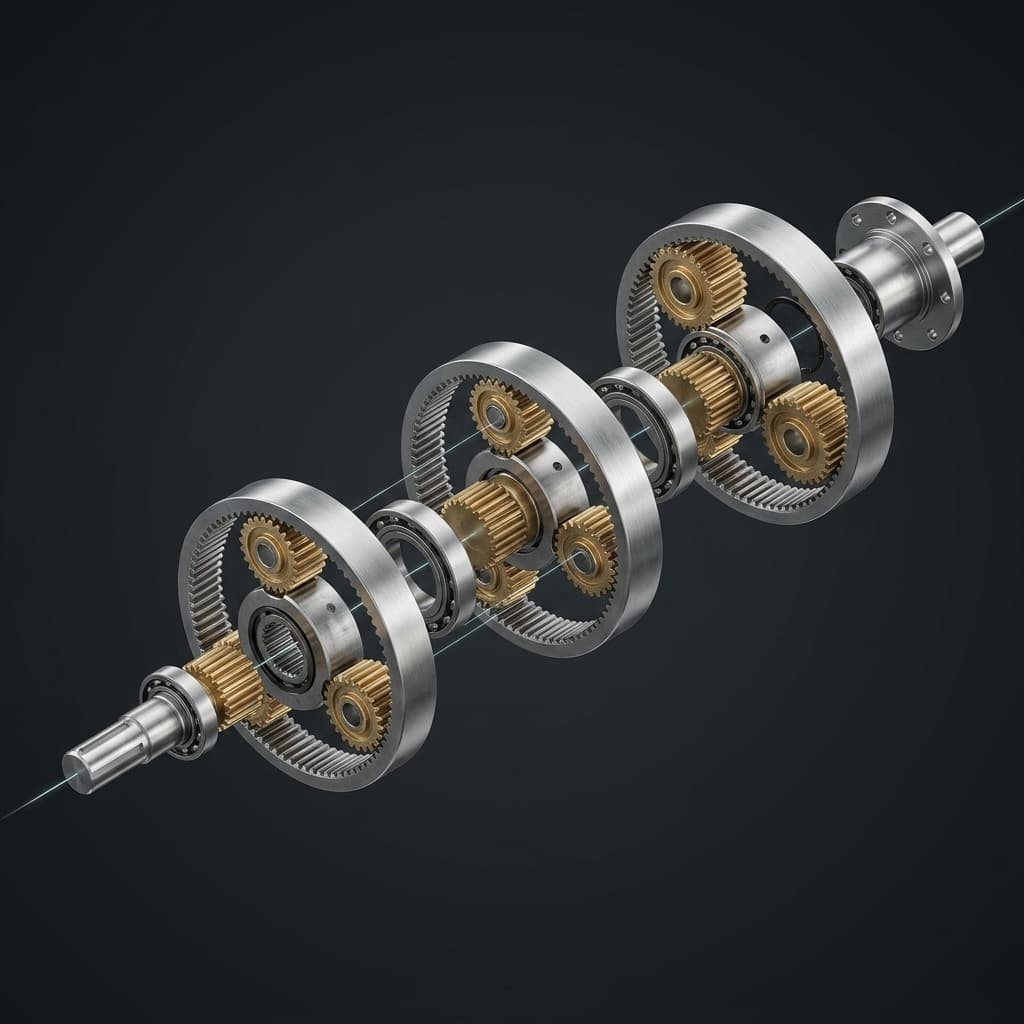
Exploded gearbox components showing why Creo CAD geometry must be paired with tolerances, bearing fits, and inspection evidence

Real component evidence

CAD shape is only one layer of a reducer release pack

A two-stage Creo assembly can make shaft axes, pitch circles, housings, and motion constraints visible. It still needs gear-rating assumptions, tooth quality, bearing fits, lubrication notes, backlash inspection, and supplier process capability before it should drive manufacturing release.

Check your reducer concept

Fit and non-fit

Who should use this page?

Best fit

  • - Engineers creating a two-stage spur/helical concept.
  • - Teams deciding whether a Creo model is mature enough for supplier review.
  • - Students who need a transparent workflow from ratio to assembly motion.
  • - OEM buyers translating CAD intent into an RFQ evidence pack.

Not enough by itself

  • - Safety-critical release approval.
  • - Certified AGMA/ISO gear rating.
  • - Final backlash guarantee without inspection data.
  • - Lubrication, bearing life, noise, heat, and fatigue sign-off.

Method and assumptions

How the tool scores a Creo-ready two-stage reducer concept

The checker uses a deliberately narrow engineering gate: split the total ratio into two practical stages, estimate two mesh losses, score backlash and package pressure, and downgrade results when the expected output is closer to manufacturing release than concept modeling.

Scope note: the checker separates confirmed CAD workflow facts, page-level assumptions, and supplier-dependent release evidence so the Creo model does not outrun what can be verified.

InputWhy it mattersTool boundaryRelease caveat
Total ratioDrives stage split and output speed.4:1 to 80:1Tooth counts and modules still need rating checks.
Backlash targetSeparates concept CAD from precision release.Risk rises below 10 arcminNeeds tolerance stack-up and inspection evidence.
Envelope + face widthFlags torque density and packaging pressure.Directional onlyDoes not calculate bending/contact stress.
Validation depthDetermines whether the model is geometry-only or reviewed.Geometry, kinematic, supplier reviewSupplier evidence is required for release confidence.

Evidence gap audit

Which claims are proven, limited, or still pending?

A hybrid page is only useful if the tool output does not outrun the evidence. Use this table to decide whether your next step is Creo modeling, rating calculation, or supplier confirmation.

Last reviewed: 2026-06-06. Evidence status can change when PTC help pages, ISO/AGMA standards, or supplier process capabilities are updated.

ClaimStatusPractical action
Creo gear pair can check speed reduction intent.ConfirmedUse Mechanism gear pairs for velocity relationship and direction checks.
Creo mechanism motion proves backlash or tooth contact.RejectedKeep backlash, contact stress, and manufactured clearance as separate calculations/inspection tasks.
Two-stage spur/helical concepts can be rated with recognized methods.Confirmed with scope limitsUse ISO 6336/AGMA-style rating work for experienced design comparison before release.
A public table can guarantee <6 arcmin custom gearbox backlash.No reliable public evidenceRequest supplier tolerance stack-up, inspection method, sample report, and acceptance criteria.
4-80:1 is a universal two-stage reducer limit.Tool assumptionTreat it as this page checker corridor; outside it, run architecture selection first.

Data sources and evidence

What is sourced, and what remains uncertain

Public sources can justify workflow boundaries, not private project release. The page therefore shows which evidence is known, which is directional, and which needs supplier data.

Source layerDate / confidenceSupportsBoundary
PTC Creo Mechanism Design helpCreo help page reviewed 2026-06-06
Confidence: High
Generic gear pairs are useful for speed relationship checks because PTC describes them as constraining motion-axis velocity.PTC also states the generic gear pair is not based on model geometry and does not constrain relative spatial orientation, so it is not tooth-contact, backlash, or strength proof.
PTC Learning Connector generic gear connection tutorialTutorial search result reviewed 2026-06-06
Confidence: Medium
PTC training material reinforces that generic gear pairs are velocity constraints and can accept a directly specified gear ratio.Training material supports the CAD workflow boundary, not project-specific release approval.
ISO 6336-1:2019 public scope2019 standard edition; public scope reviewed 2026-06-06
Confidence: High
The ISO 6336 series is the relevant public method family for comparing load capacity of cylindrical spur and helical involute gears.The public scope notes exclusions such as plastic deformation, case crushing, wear, and unpredictable vibratory profile breakdown. A simplified page tool cannot claim ISO compliance.
KHK Gear Technical Reference on backlashTechnical reference reviewed 2026-06-06
Confidence: High
Backlash is a real gear-mesh clearance topic affected by tooth geometry, operating center distance, and assembly/manufacturing variation.Catalog education cannot confirm a specific supplier can hold a requested arcminute target without tolerance and inspection data.
AGMA standards catalogStandards catalog reviewed 2026-06-06
Confidence: Medium
AGMA maintains gear-related standards and information sheets, including design, rating, accuracy, and lubrication topics.Most standard details are paid or scoped documents; this page therefore cites scope-level guidance and avoids reproducing formulas or claiming certification.
Supplier manufacturing reviewProject-specific evidence; pending until RFQ/review
Confidence: Pending
Confirms achievable module, tooth count, material, heat treatment, grinding/hobbing, gear quality, backlash inspection method, and process capability.No reliable public source can prove a custom project is manufacturable until the supplier reviews the actual data pack.

Creo workflow boundary

What belongs in Creo, and what must stay outside the CAD model

The practical mistake is not using Creo; it is treating a polished model as equivalent to rating, tolerancing, and inspection. Keep the handoff evidence visible at each step.

Workflow stepCreo can documentEvidence outside CreoRelease risk
Layout skeletonAxes, pitch circles, center-distance controls, envelope planesTarget ratio, torque, speed, duty cycle, backlash targetLow if clearly marked concept-only
Mechanism gear pairVelocity relationship, direction, assembly motion, gross interferenceTooth-count rationale and ratio mathMedium if mistaken for contact analysis
Detailed gear/shaft modelParts, datums, housing clearances, drawing viewsModule, pressure angle, face width, bearing loads, lubrication intentHigh without tolerance and rating notes
Supplier release packControlled CAD, drawings, revisioned exportsISO/AGMA-style rating, material, heat treatment, gear quality, inspection reportHigh until supplier capability is confirmed

Alternative paths

Compare Creo CAD-first with other design workflows

Alternative architecture matrix2-stageplanetwormratiotorque density
PathBest forWeak pointDecision
Creo CAD-firstEarly packaging, shaft layout, mechanism demonstrationCan overstate readiness if drawings lack tolerancesUse for concept and communication
Spreadsheet/gear-rating-firstStrength, stress, life, thermal, and standard checksCan miss housing and assembly conflictsUse before manufacturing release
Supplier co-designLow backlash, high torque, custom materials, production launchLonger feedback loop and less internal controlUse for precision or release-critical work
Catalog reducer selectionFast procurement when envelope and ratio match a standard modelLess freedom over shaft layout and packagingUse when custom Creo design is not required

Risk controls

Keep the Creo model useful without overclaiming it

CAD release risk matrixprobabilityrelease impact

Misusing CAD as proof

Impact: High

Separate Creo motion checks from AGMA/ISO-style rating, tolerance stack-up, and supplier inspection evidence.

Backlash target too tight

Impact: High

Request tooth thickness, center-distance, bearing-fit, and final inspection method before release.

Envelope overconstraint

Impact: Medium

Model skeleton axes and pitch circles before tooth detail; reserve clearance for bearings, seals, and lubricant.

Wrong architecture

Impact: Medium

Compare two-stage spur/helical against planetary, worm, right-angle, and three-stage alternatives.

Drawing package incomplete

Impact: High

Add material, heat treatment, gear quality, datum scheme, inspection notes, lubrication, and revision control.

Scenario examples

How to interpret the output in real projects

Student or concept engineer

Inputs: 25:1 ratio, 1800 rpm, moderate torque

Use: Use the page tool to split stages, build a Creo skeleton, and demonstrate mechanism motion.

OEM prototype team

Inputs: 20-50:1, tight envelope, custom shaft

Use: Keep the CAD model parametric and send the checklist to suppliers before detailed teeth are frozen.

Precision automation project

Inputs: <6 arcmin backlash or high torque density

Use: Treat the tool output as a risk screen and require supplier tolerance + inspection evidence before release.

Production drawing release

Inputs: Manufacturing package requested

Use: Use Creo for controlled geometry, but add rating, material, heat treatment, quality, and inspection data.

Source notes

References used for the report layer

The page uses public documentation and engineering education sources for boundaries. It does not reproduce paid standards or claim compliance without project-specific review.

Updated: 2026-06-06. Where evidence is unavailable publicly, the page marks it as pending instead of filling the gap with unsupported certainty.

PTC Creo Mechanism Design help. Supports the narrow claim that generic gear pairs constrain motion-axis velocity; limits the claim because they are not based on model geometry.PTC Learning Connector generic gear connections. Reinforces the velocity-constraint framing and direct gear ratio setup for Creo mechanism work.ISO 6336-1:2019 scope. Supports formal spur/helical involute load-capacity framing and the warning that simplified CAD checks are not rating.KHK Gear Technical Reference: backlash. Supports backlash as an explicit clearance/tolerance topic that needs more than visual CAD geometry.AGMA standards catalog. Used as a standards-scope pointer for gear design/rating topics; formula-level application remains project-specific.

FAQ

Questions engineers ask before modeling a two-stage reducer in Creo

Can PTC Creo automatically design a two-stage speed reducer gearbox?

Creo can control the CAD assembly, parametric geometry, drawings, and mechanism motion checks, but it does not replace certified gear rating, material selection, heat treatment, tolerance stack-up, or supplier manufacturing review.

What is a good first ratio split for a two-stage reducer?

A practical first pass is close to the square root of the total ratio, then adjusted for tooth counts, center distance, packaging, noise, and torque loading. The page tool uses that approach as a concept gate, not a final tooth-count calculator.

Should I model exact involute teeth in the first Creo layout?

For early layout, pitch circles, shaft axes, envelope planes, and simplified gear solids usually move faster. Exact tooth geometry belongs in the detailed model after module, pressure angle, face width, and tolerance assumptions are stable.

Does a Creo gear pair prove manufactured backlash?

No. Mechanism gear pairs can prove motion ratio and kinematic behavior, while manufactured backlash depends on tooth thickness, center-distance tolerance, profile quality, bearing fits, assembly preload, and inspection method.

When is a two-stage parallel-shaft concept not suitable?

It may be unsuitable when ratio is very high, envelope is extremely tight, output torque is high relative to gear size, right-angle output is required, or the application needs planetary torque density.

What evidence should be attached before release?

Attach ratio split rationale, shaft layout, gear data table, tolerance notes, backlash target and inspection method, bearing/lubrication assumptions, material and heat treatment intent, and supplier manufacturability review.

Can I use this page for helical gears?

Yes for concept gating. Helical designs still need helix angle, axial load, bearing reaction, lead quality, and noise checks that are outside this simplified page tool.

What is the biggest Creo modeling mistake on this topic?

The common mistake is detailing attractive gear teeth before locking shaft axes, center distances, housing clearance, tolerance assumptions, and supplier capability.

What should be checked in Creo Mechanism Design?

Check gear-pair velocity relationship, shaft direction, collision envelope, assembly constraints, and interference across representative rotation steps. Treat load capacity as a separate engineering calculation.

Can this page replace AGMA or ISO gear calculations?

No. The page creates a CAD-readiness gate and evidence checklist. Use applicable AGMA, ISO, company, or supplier methods for rating, inspection, material, and release decisions.

What file structure works best in Creo?

Use a skeleton or layout part to drive axes, pitch circles, envelope planes, and key dimensions, then reference it into gear, shaft, housing, and drawing files.

What should I send to a supplier after using the tool?

Send the target ratio, torque, speed, duty cycle, backlash target, envelope, preliminary stage split, gear material assumptions, inspection requirements, and whether you need concept feedback or manufacturing release support.
Adjacent engineering paths

Continue from Creo concept to supplier-ready reducer review

2 stage reduction gearbox supplier2 speed gearbox manufacturersplanetary gearbox selection1 arcmin backlash context

Inquiry Email

[email protected]

Open email appStart inquiry (opens email app)Copied

WhatsApp

+86 188 5797 1991

Chat on WhatsApp