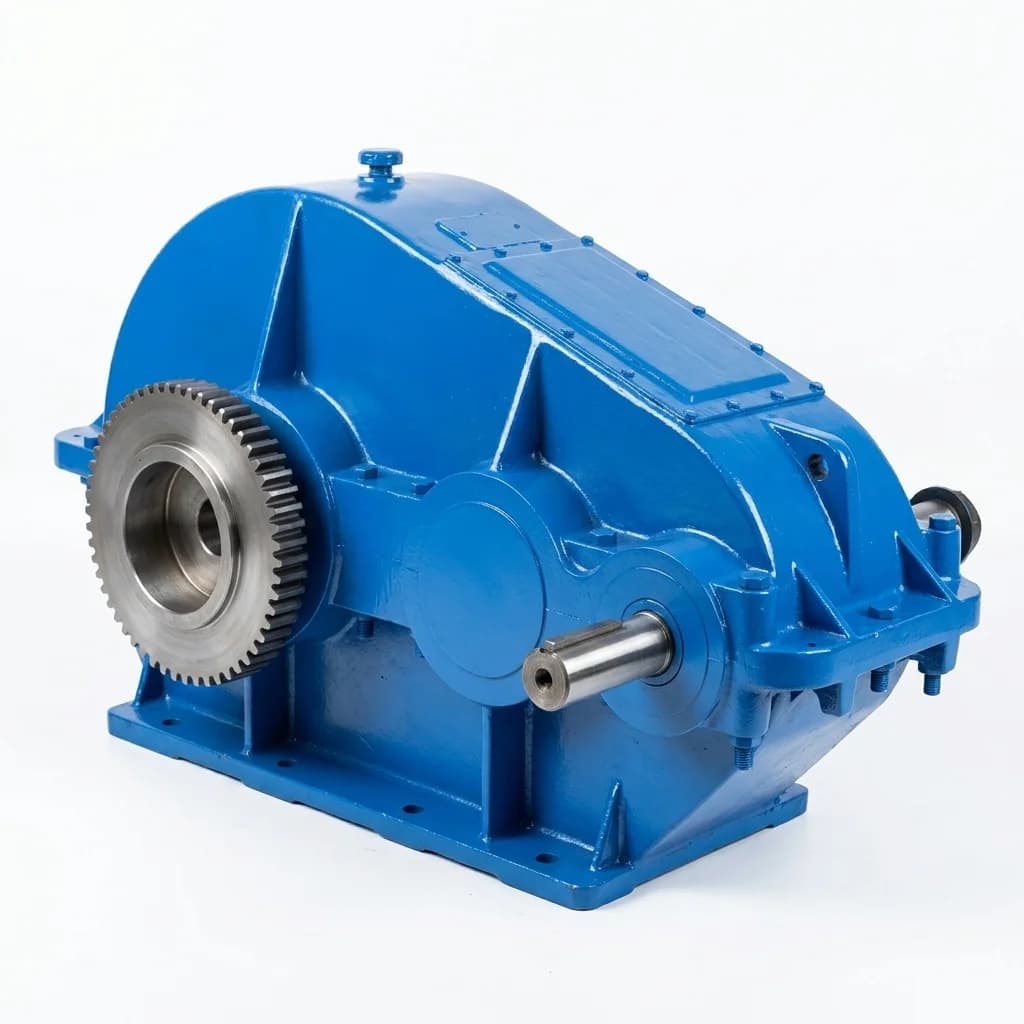
Flange Output vs. Shaft Output Planetary Gearboxes: A Sourcing and Engineering Guide
Compare flange output and shaft output planetary gearboxes. Learn when to pay the premium for flange mounts based on torsional stiffness, space, and BOM costs.
Hero Conclusion: While flange output gearboxes carry a higher unit price than traditional shaft outputs, they often reduce total Bill of Materials (BOM) costs by eliminating the need for expensive zero-backlash couplings. For high-dynamic applications like delta robots and rack-and-pinion drives, the flange's superior torsional stiffness and radial load capacity make it the mandatory choice. (Last updated: July 23, 2026)
Scope and Limits: This guide is designed for procurement professionals, sourcing managers, and automation engineers comparing low backlash planetary gearboxes for industrial automation. It focuses specifically on the mechanical output interface (flange vs. shaft) and its impact on cost, installation space, and system rigidity. The guidance is global and standards-oriented, but final selection still depends on the supplier datasheet, duty cycle, bearing-life calculation, motor inertia ratio, and local delivered cost.
In the world of precision motion control, planetary gearbox product families generally come in two output styles: the traditional cylindrical shaft and the ISO 9409-1 standard flange.
Historically, engineers defaulted to shaft outputs because they were standard across general power transmission applications. However, as automation moves toward higher speeds, heavier payloads, and faster cycle times, the mechanical connection between the gearbox and the machine has become a major bottleneck.
Procurement teams often question the higher cost of flange output gearboxes. Is the premium justified? This guide breaks down the engineering reality and the hidden cost savings of switching to a flange output.
Cost Offset Analysis: The Hidden Price of Couplings
At first glance, a shaft output planetary gearbox is cheaper. However, to connect a round shaft to a driven load (like a ball screw or a pulley), you must purchase an external coupling.
For high-precision servo applications, standard jaw couplings are often insufficient. Buyers usually specify a zero-backlash bellows coupling or torsionally stiff elastomer coupling, which can easily add $100 to $300 USD depending on size and supplier. Treat that range as a 2026 screening estimate, not a universal quote. Furthermore, the coupling adds axial length to the machine, requiring longer mounting brackets and larger safety guards.
The Flange Advantage: A flange output gearbox allows the driven component (e.g., a rotary table, a pinion gear, or a robotic arm link) to bolt directly to the face of the gearbox.
- Zero Coupling Cost: The need for an external coupling is eliminated.
- Reduced Labor: Mechanics spend less time aligning shafts and tightening clamping hubs.
- Compact Footprint: The axial length of the drivetrain is significantly reduced.
When calculating the total BOM, the "expensive" flange gearbox is often the cheaper overall solution. If the axis is a ball-screw or belt-drive package, compare the actual shaft-coupling stack against an inline planetary gearbox before approving the purchase order.
Engineering Trade-offs: Torsional Stiffness and Radial Load
The mechanical superiority of the flange output comes from its geometry.
Torsional Stiffness
Torsional stiffness is the resistance to twisting under load. A shaft is a relatively small diameter cylinder. Under heavy acceleration, the shaft will twist slightly, introducing positioning errors. A flange has a much larger diameter. Because torsional stiffness increases with the fourth power of the radius, a flange output is exponentially stiffer than a standard shaft. This is critical for Delta robots, CNC tool changers, and high-dynamic axes using a helical planetary gearbox.
Radial and Bending Loads
When a pulley or pinion is mounted on a standard shaft, the load is applied at a distance from the gearbox bearings. This creates a high bending moment. Flange gearboxes feature massive crossed-roller or angular contact bearings placed directly behind the mounting face. The load sits practically on top of the bearing, minimizing leverage and drastically increasing radial load capacity. If the drivetrain also needs a compact 90-degree package, check whether a right-angle planetary gearbox can keep the pinion load closer to the supported output face.
Comparison: Flange vs. Shaft Output Gearboxes
| Decision Dimension | Flange Output (ISO 9409-1) | Shaft Output (Keyed/Smooth) |
|---|---|---|
| Unit Cost | Premium ($$$) | Baseline ($$) |
| Total BOM Cost | Often lower (No coupling needed) | Higher (Requires precision coupling) |
| Axial Space Requirements | Very Compact | High (Due to shaft and coupling) |
| Torsional Stiffness | Extremely High | Moderate to Low |
| Radial/Bending Load Capacity | Excellent (Load sits near bearing) | Moderate (Load applies leverage) |
| Best Application Fit | Rack & pinion, rotary tables, delta robots | Ball screws, belt drives, simple indexers |
Procurement and Engineering Sourcing Checklist
When reviewing a bill of materials or a new machine design, use this checklist to determine if you are buying the right output style:
- Verify the external coupling cost: If the engineering team selected a shaft output, ask for the cost of the required coupling. Compare the combined cost (gearbox + coupling) against a direct-drive flange gearbox.
- Check axial space constraints: If the machine footprint is tight, challenge the use of a shaft output. A flange output can save several inches of critical length.
- Review load placement: Is the engineering team mounting a heavy pulley or pinion far out on the shaft? This invites premature bearing failure. Suggest a flange mount.
- Standardize on ISO 9409-1: Ensure the requested flange gearbox complies with the ISO 9409-1 standard. This prevents vendor lock-in and allows procurement to second-source gearboxes without redesigning the machine's mounting plates.
- Confirm stiffness requirements: If the application requires rapid reversals (like a pick-and-place robot), ensure a flange output is used to prevent resonance and settling delays.
- Package the RFQ evidence: Attach motor data, load offset, duty cycle, backlash target, and mounting envelope. If your buyer checklist is incomplete, use the engineering resources page to structure the handoff.
Frequently Asked Questions (FAQ)
Q: Are flange output gearboxes harder to install? A: Actually, they are often easier. You simply bolt the mating component to the face using standard dowel pins and cap screws. You don't have to worry about keyway slop, clamping hub torques, or shaft alignment issues.
Q: Can I use a flange gearbox for a ball screw drive? A: Yes, but it usually requires an adapter plate. Shaft output gearboxes are generally the standard and most economical choice for driving linear ball screws, as standard couplings handle slight misalignments perfectly.
Q: Does a flange output improve the backlash rating of the gearbox? A: No, the internal gear backlash remains the same. However, a flange output improves the total system stiffness. Many engineers confuse backlash with poor stiffness. A flange eliminates the "sponginess" of a shaft coupling, making the system feel much tighter and more responsive.
Q: What is ISO 9409-1? A: It is an international standard defining the mechanical interfaces for industrial robots. Most reputable planetary gearbox manufacturers offer flange outputs that conform to this standard bolt circle and dowel pin arrangement.
Final Recommendations for Buyers
For standard linear motion via ball screws, continue sourcing cost-effective shaft output gearboxes.
However, for high-dynamic robotics, rack-and-pinion gantries, and rotary indexing tables, the flange output is the superior technical and commercial choice. By eliminating the external coupling, you simplify the supply chain, reduce installation labor, and provide your engineers with a stiffer, more reliable drive system.
Struggling to decide between a flange or shaft output for your next project? Send our application engineers your payload, speed profile, and space constraints, or start from the contact page, and we will recommend the optimal gearbox architecture.
Contact our engineering team to review your gearbox application today.
Sources and References
- ISO 9409-1: Industrial robots — Mechanical interfaces - The standard governing flange dimensions for precision robotics.
- Harmonic Drive HPG planetary gearheads catalog - Manufacturer data describing output flange bearing support for radial, axial, and tilting loads.
- Reckon Drives: radial load, lifespan, and torque ratings - Practical explanation of how output shaft loads affect usable torque and gearbox life.
- Power Transmission Engineering: precision coupling basics - Coupling selection context for stiffness-sensitive precision motion systems.
Author

More Posts
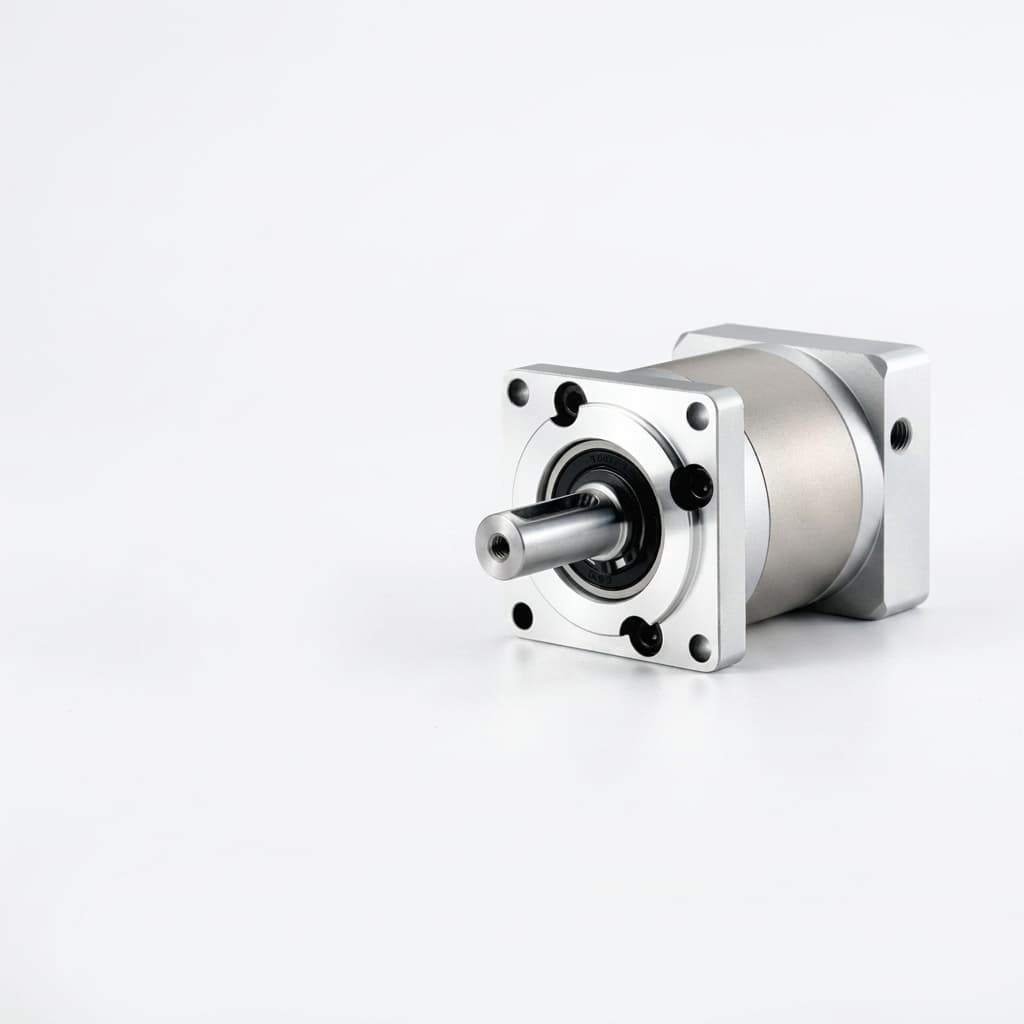
Smart Planetary Gearboxes in 2026: IoT Integration and Predictive Maintenance
Use this 2026 sourcing checklist to evaluate IoT-ready low backlash gearboxes, predictive maintenance data, protocol fit, and retrofit limits.
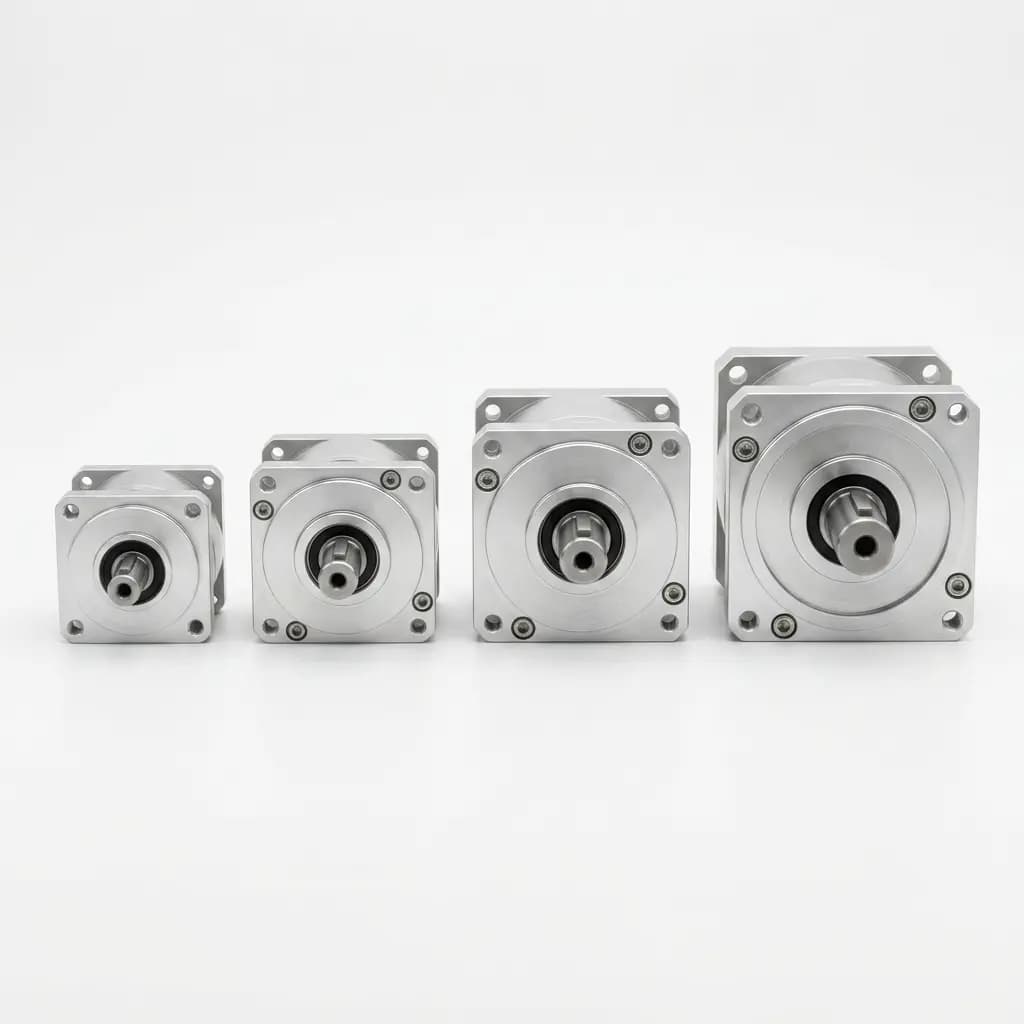
The Hidden Cost of Over-Specifying Backlash: A Procurement Guide
A practical July 2026 checklist for deciding when <=1 arc-min backlash is justified, when 3-8 arc-min is enough, and what evidence procurement should request before approving a premium gearbox.
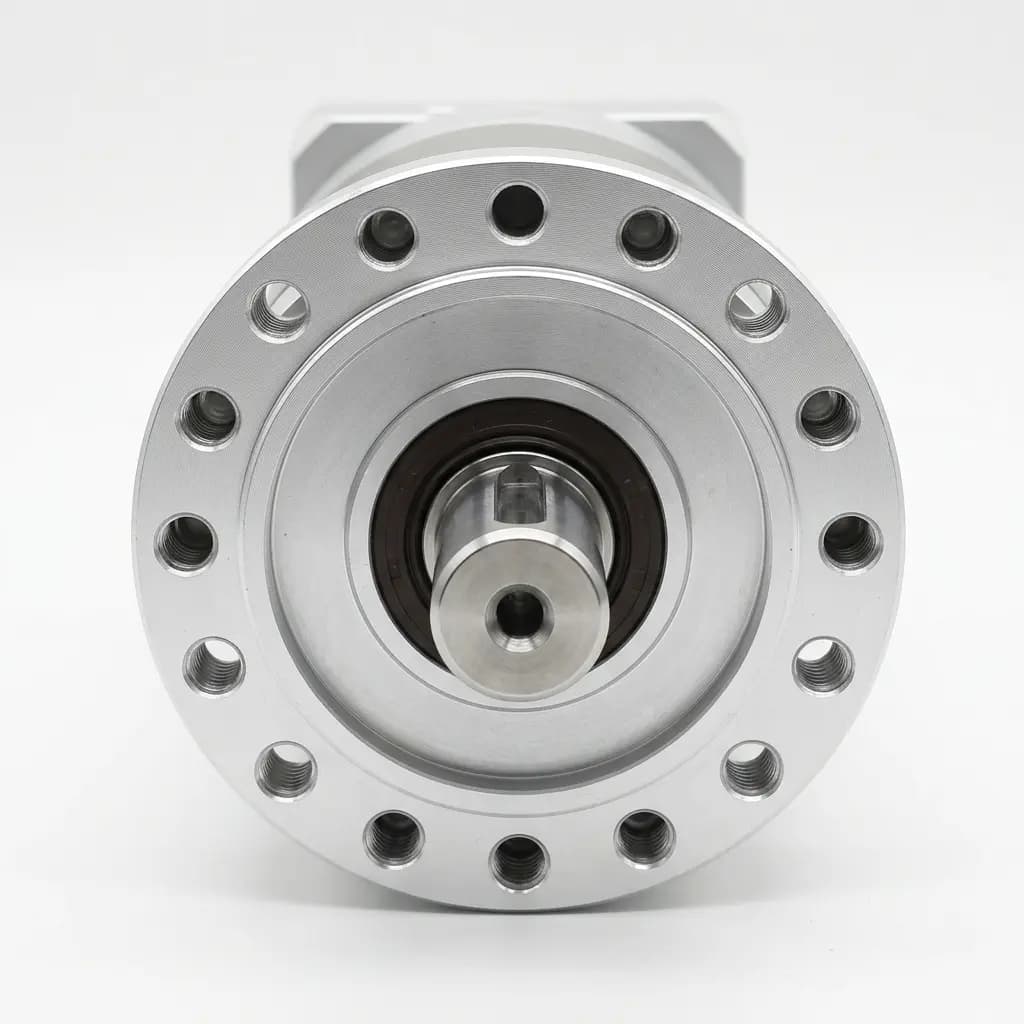
Helical vs. Spur Planetary Gearboxes: Engineering Trade-offs
An objective analysis of Helical vs. Spur gear technologies. Discover when to pay the premium for helical gears and when spur gears are the smarter, more reliable choice.