Specifying Low Backlash Gearboxes for AGV and AMR Wheel Drives
Choose low backlash gearboxes for AGV/AMR wheel drives with a 2026 checklist for radial loads, shock ratings, bearings, backlash, and RFQ review steps.
Hero Conclusion: For AGV and AMR wheel drives, the most critical specification is not ultra-low backlash, but rather the output bearing's radial load capacity and the gearbox's emergency-stop shock resistance. Prioritizing these over sub-arc-minute precision reduces costs, shortens lead times, and prevents catastrophic field failures. (Last updated: July 2026)
Scope and Limits: This guide is designed for procurement teams, sourcing managers, and application engineers tasked with selecting planetary gearboxes for Automated Guided Vehicles (AGVs) and Autonomous Mobile Robots (AMRs). The guidelines apply primarily to differential drive and omnidirectional wheel modules operating in intralogistics and factory automation. It does not cover steering motors or heavy construction equipment drives.
The intralogistics revolution has transformed how factories and warehouses move materials. At the heart of this shift are AGVs and AMRs, which rely on compact, battery-powered servo drivetrains. When engineers first adapt industrial servo gearboxes for mobile robot wheels, they often treat them like stationary CNC axes. They specify ultra-low backlash (1 arc-min or lower) and standard bearings.
This is a costly mistake. A wheel drive is fundamentally different from a robotic arm or a packaging indexer. The gearbox is not just transmitting torque; it is literally carrying the weight of the vehicle, absorbing the shock of floor bumps, and dragging the load. If procurement buys a standard high-precision planetary gearbox for an AMR wheel without auditing the radial load capacity, the gearbox will fail—not from gear wear, but from shattered output bearings.
This guide provides a comprehensive framework to transition from buying generic "precision gearboxes" to sourcing robust, application-specific AGV/AMR wheel drives.
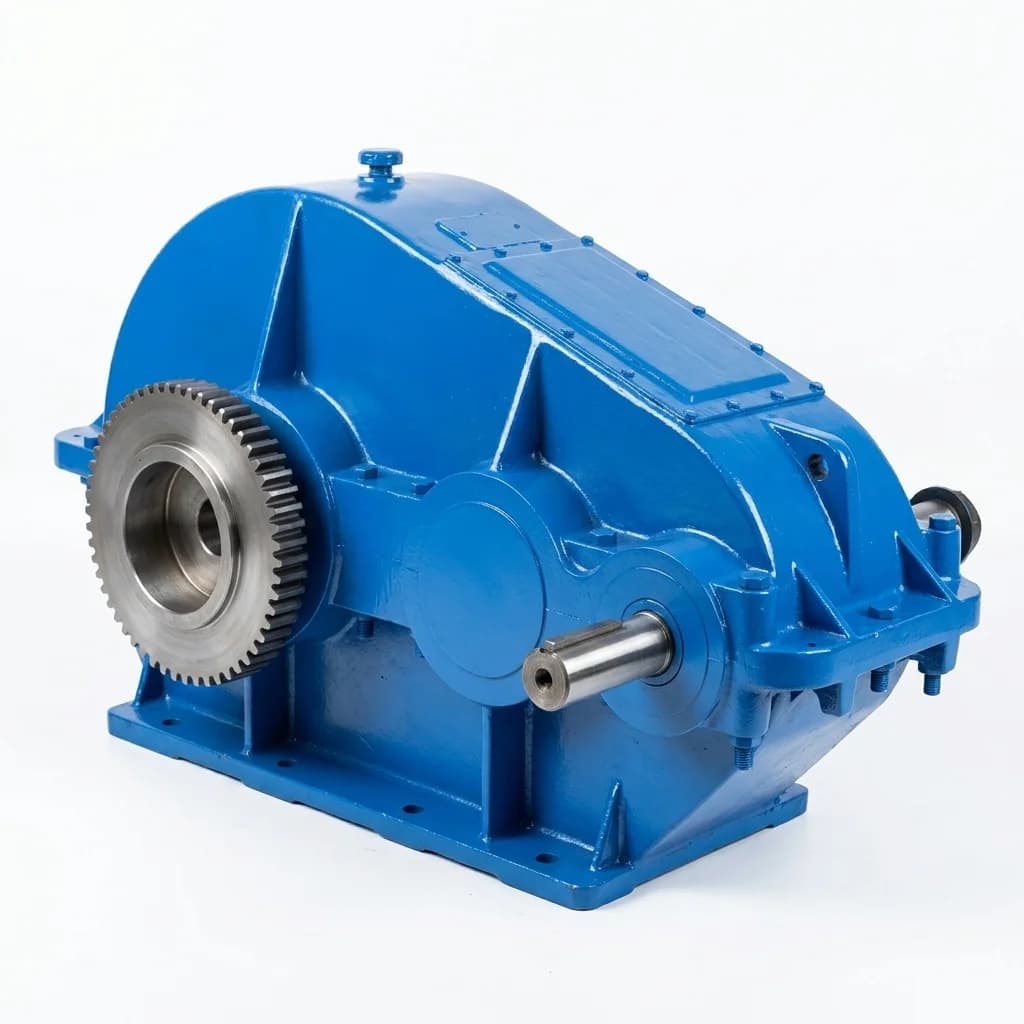
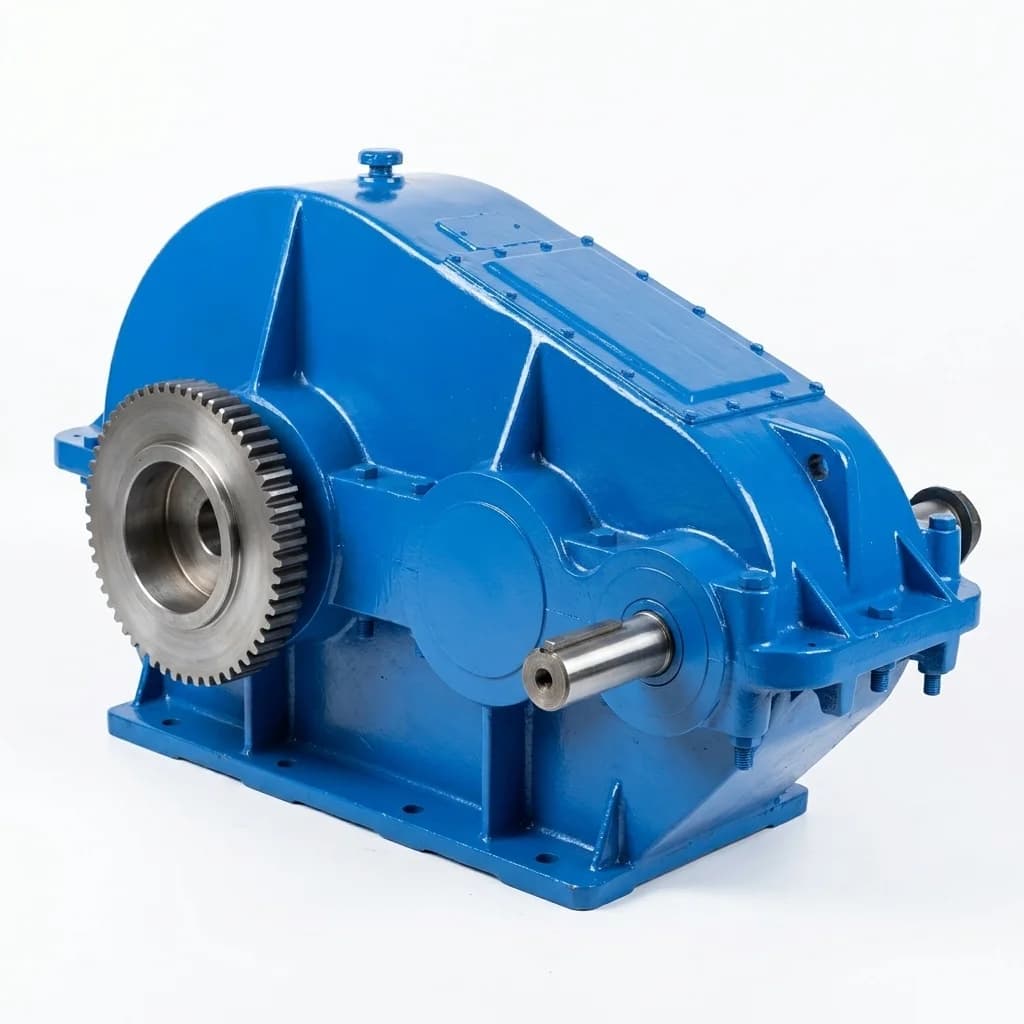 Heavy-duty planetary gearboxes designed for AGV wheel drives prioritize bearing support and compact integration over ultra-low backlash.
Key Conclusions for AGV/AMR Drive Sourcing
Before delving into the engineering evidence, procurement teams should align on these core realities:
- Radial Load Overrules Backlash: The vehicle's weight and payload sit directly on the gearbox output shaft. Standard deep groove ball bearings will fail under heavy AMR payloads.
- Shock Loads are Guaranteed: Floor transitions, warehouse thresholds, and emergency stops (E-Stops) create massive instantaneous torque spikes. The gearbox must have a documented emergency E-Stop rating, typically 2.5x to 3x the nominal torque.
- Space is Premium: Wheel drives must fit inside the wheel hub or chassis envelope. Gearboxes with integrated mounting flanges reduce the overall length of the drive module.
- Efficiency Equals Battery Life: Every percentage point of efficiency lost in the gearbox reduces the robot's runtime and increases battery costs.
Comprehensive Procurement & Engineering Decision Matrix
To ensure that teams do not miss critical specifications, use this decision matrix when evaluating gearbox options for wheel drives.
| Decision Parameter | Engineering Requirement | Procurement Checkpoint | Failure Risk if Ignored | Supplier Communication Field |
|---|---|---|---|---|
| Backlash Rating | 5-8 arc-min (Sweet Spot) | Avoid 1 arc-min or lower premiums | Unnecessary cost, longer lead time, stiffness mismatch | "Provide pricing for standard precision class." |
| Output Bearing | Tapered / Angular Contact | Reject standard deep groove | Catastrophic shaft/bearing failure under radial load | "Confirm exact output bearing architecture." |
| Shock Load Rating | Greater than 2.5x nominal torque | Check E-Stop rating | Sheared gear teeth during E-Stops or threshold bumps | "What is the peak acceleration/E-Stop torque?" |
| Gearing Type | Helical Gearing | Ensure noise limits are met | Warehouse worker acoustic fatigue, vibration | "Are the planetary gears straight spur or helical?" |
| IP Rating | IP65 minimum (Indoor) | Verify washdown/outdoor needs | Premature failure from water ingress and dust | "Confirm ingress protection (IP) rating." |
| Thermal Rating | Continuous-duty operation | Request temp rise data | Overheating, accelerated lubricant breakdown | "Provide heat dissipation limits at nominal load." |
| Lubrication | Lifetime Synthetic Grease | Maintenance-free requirement | Downtime for oil changes, leakage on warehouse floor | "Is the unit sealed and lubricated for life?" |
Evidence: Radial Load and Output Bearing Design
The most common failure mode for standard planetary gearboxes used in AGVs is bearing collapse. When a 1,000 kg robot turns or hits a bump, the radial and axial forces on the wheel exert a massive bending moment on the gearbox shaft.
To evaluate a supplier's quote, you must look past the gear ratio and backlash numbers and examine the output bearing architecture.
Comparing Output Bearing Types for Wheel Drives
| Bearing Architecture | Radial Load Capacity | Axial Load Capacity | Typical Application / Vehicle Weight | Cost Impact | Procurement Recommendation |
|---|---|---|---|---|---|
| Deep Groove Ball Bearings | Low to Moderate | Low | Light payloads, small inspection robots below 100 kg | Baseline ($) | Avoid for heavy industrial AGVs. Will fail quickly under side-loads. |
| Dual Angular Contact Bearings | High | Moderate | Medium AMRs, warehouse fulfillment bots (100 - 500 kg) | Premium ($$) | Acceptable for most standard mobile robots. Good balance of cost and load. |
| Tapered Roller Bearings | Very High | Very High | Heavy-duty AGVs, automotive assembly carts (500 - 2,000+ kg) | High ($$$) | Mandatory for heavy payloads. The angled rollers absorb massive shocks. |
| Crossed Roller Bearings | Extreme (High tilting moment) | High | Flange-mount wheels, omni-wheels, compact low-profile drives | Highest ($$$$) | Specify when space is extremely tight and the wheel mounts directly to the gearbox flange. |
| External Wheel Hub Bearings | N/A (Load bypassed) | N/A | When the gearbox only provides torque, and a separate axle bears the weight | Variable | Ideal Architecture if space permits, as it isolates the gearbox from radial shocks. |
Data supported by structural comparisons from leading motion control manufacturers. When a supplier offers a surprisingly cheap gearbox for an AGV, it is almost always because they are using standard deep groove ball bearings instead of tapered or angular contact bearings.
Calculating the Real Load
Engineers must calculate the Dynamic Radial Load. This is not just the static weight of the robot divided by the number of wheels.
Dynamic Radial Load = (Static Weight per Wheel + Max Payload per Wheel) × Shock FactorWhere Shock Factor is typically 1.2 for smooth epoxy floors, but 1.5 to 2.0 for concrete with expansion joints or ramps.
Backlash Requirements: Why 5-8 Arc-Min is Enough
As discussed in our Hidden Costs of Over-Specifying Backlash guide, paying for 1 arc-min or lower precision is often unnecessary. For AGVs and AMRs, it is actively counterproductive.
Why 1 arc-min or lower is overkill for mobile robots:
- Tire Yield: The polyurethane or rubber tire on the wheel will compress and yield far more than 1 arc-minute of angular gear play. The tire is the weakest link in the precision chain.
- Odometry Limitations: Mobile robots rely on SLAM (Simultaneous Localization and Mapping), Lidar, and floor cameras to navigate. The central controller constantly corrects minor trajectory deviations.
- Cost: Ultra-low backlash gearboxes cost significantly more and have longer lead times.
The Sweet Spot (3 to 8 Arc-Min): For over 90% of differential drive AMRs, a standard precision class of 5-8 arc-min is perfect. It provides enough tightness to prevent jerky motion during reversal, without incurring the premium costs of CNC-grade gearboxes. If the AGV requires extremely smooth low-speed crawling, 3 arc-min or lower can be specified, but only if the wheel material is rigid enough to benefit from it.
The Impact of Shock Loads and Emergency Stops
Mobile robots operate around humans. Under the ANSI/RIA R15.08 safety standard, they must be capable of aggressive emergency stops to avoid collisions.
When an AMR traveling at 2.0 m/s slams on its brakes, the kinetic energy of the payload is transferred directly through the wheels into the gearbox teeth. This creates an E-Stop Torque Spike.
Standard industrial gearboxes are rated for a maximum acceleration torque of about 2x the nominal torque. Dedicated AGV gearboxes must withstand 2.5x to 3x nominal torque for emergency stops. If procurement buys a gearbox based solely on continuous running torque, the gear teeth will shear during the first few emergency stops.
Efficiency: Helical vs. Spur Gears
Battery life dictates the operational uptime of a mobile robot fleet. Every watt of energy lost as heat inside the gearbox is energy not used for driving.
- Spur Gears: Traditional straight-cut spur gears are very efficient (up to 97% for a single stage) but can be noisy. Noise is a major factor in warehouse environments with human workers.
- Helical Gears: Helical gears operate more smoothly and quietly due to gradual tooth engagement. However, the sliding action generates more friction and axial thrust. High-quality helical planetary gearboxes optimize the helix angle to maintain 95-97% efficiency while drastically reducing decibel levels.
For indoor AMRs working near humans, helical planetary gearboxes are generally preferred for their acoustic performance, provided the manufacturer uses high-quality seals and low-friction lubricants to maintain efficiency.
Procurement Action Plan: The AGV Gearbox Checklist
When reviewing supplier quotes or engineering requisition forms for mobile robot drives, procurement teams should use this checklist to ensure they are buying a resilient solution, not just a precision instrument.
- Verify the Output Bearing: Does the supplier explicitly state they are using tapered roller bearings or angular contact bearings? If it's a deep groove bearing, reject the quote for anything over a 100kg vehicle.
- Check the Shock Rating: Is the emergency stop torque explicitly rated? (Should be greater than 2.5x nominal torque).
- Audit the Backlash: If engineering requested 1 arc-min or lower, ask them to justify it against the compliance of the rubber tire. Suggest 5-8 arc-min to expand the supplier pool and reduce costs.
- Confirm IP Rating: Warehouse floors get mopped, and AGVs often cross wet thresholds. Ensure a minimum of IP65 rating, with IP67 or IP69K for outdoor or washdown environments.
- Request Thermal Data: Ask the supplier for continuous operation temperature rises based on a continuous-duty cycle.
- Review Integration: Does the gearbox have a direct wheel-mount flange to save space, or does it require bulky external couplings?
- Validate Supplier Capacity: Verify if the supplier can meet the volume requirements of your robot fleet rollout schedule, considering lead times for specialized bearings.
Frequently Asked Questions (FAQ)
Q: Can we use standard industrial servo gearboxes for our AMR project to save money? A: Usually, no. While the gear sets might be identical, standard industrial gearboxes lack the heavy-duty tapered output bearings required to support the vehicle's weight. Using standard gearboxes often leads to catastrophic bearing failure within months.
Q: Why do some suppliers offer "AGV-specific" gearboxes? What is the real difference? A: AGV-specific models typically feature integrated wheel flanges (saving axial length), reinforced tapered roller bearings, high-efficiency low-friction seals (for battery life), and specific lubricant fills optimized for low-speed, high-radial-load continuous duty.
Q: Is noise really a factor in gearbox selection for robots? A: Yes. In automated warehouses, high-pitched gear whine from dozens of robots can create a hostile environment for human workers. Helical planetary gearboxes are heavily preferred over spur gears for this reason.
Q: How do we handle regenerative braking energy? A: When an AGV slows down, the motor acts as a generator. The gearbox must be mechanically capable of transmitting reverse torque smoothly without harsh backlash chatter. A 5-8 arc-min backlash is tight enough to handle this without destructive vibration.
Q: Are there specific gearbox considerations for omnidirectional or Mecanum wheels compared to standard differential drives? A: Yes. Mecanum wheels generate significant axial thrust (side loads) during lateral movement. The gearbox must have high axial load capacity, which strongly favors tapered roller bearings or crossed roller bearings over standard angular contact bearings. Always specify the wheel type to the gearbox supplier.
Q: What is the typical lead time for a true AGV-specific gearbox? A: Because of the specialized bearings (like crossed rollers) and custom output flanges, lead times can range from 8 to 16 weeks depending on volume. Procurement should lock in blanket orders early in the prototyping phase to ensure scaling isn't bottlenecked.
Final Recommendations and Next Steps
Specifying a gearbox for an AGV or AMR is a balancing act. Procurement teams add massive value by steering engineering away from over-specifying backlash (which wastes money) and toward over-specifying bearing capacity (which saves the project).
By insisting on heavy-duty bearing architectures, verified shock-load ratings, and appropriate backlash classes, you ensure your mobile robots stay out of the repair shop and on the warehouse floor.
Need help validating your AGV wheel drive specifications? Do not risk a pilot program failure due to undersized bearings. Send us your vehicle weight, wheel diameter, top speed, and duty cycle, and we will provide a verified planetary gearbox sizing recommendation.
Contact our engineering team to review your AGV gearbox RFQ today.
Sources and References
- A3 Robot Safety Standard Documents - Source for ANSI/RIA R15.08 and related mobile robot safety standard context.
- Neugart: Gearboxes for AGVs and AMRs in warehouse automation - Industry overview of gearbox design needs for AGV and AMR drivetrain applications.
- Harmonic Drive: Meeting the Technical Demands for AMR & AGV Wheel Drives - Technical white paper covering compact wheel-drive gearheads, cross-roller bearings, efficiency, and shock resistance.
- Low Backlash Gearbox: Decoding Planetary Gearbox Accuracy - Foundational guide on how backlash and stiffness interact in industrial applications.
Author

More Posts
Flange Output vs. Shaft Output Planetary Gearboxes: A Sourcing and Engineering Guide
Compare flange output and shaft output planetary gearboxes. Learn when to pay the premium for flange mounts based on torsional stiffness, space, and BOM costs.
Decoding Planetary Gearbox Accuracy: True Backlash vs. Lost Motion
Stop sizing high-precision axes based on a single backlash number. Learn how to read hysteresis curves and calculate real-world lost motion before your machine fails in the field.
Smart Planetary Gearboxes in 2026: IoT Integration and Predictive Maintenance
Use this 2026 sourcing checklist to evaluate IoT-ready low backlash gearboxes, predictive maintenance data, protocol fit, and retrofit limits.