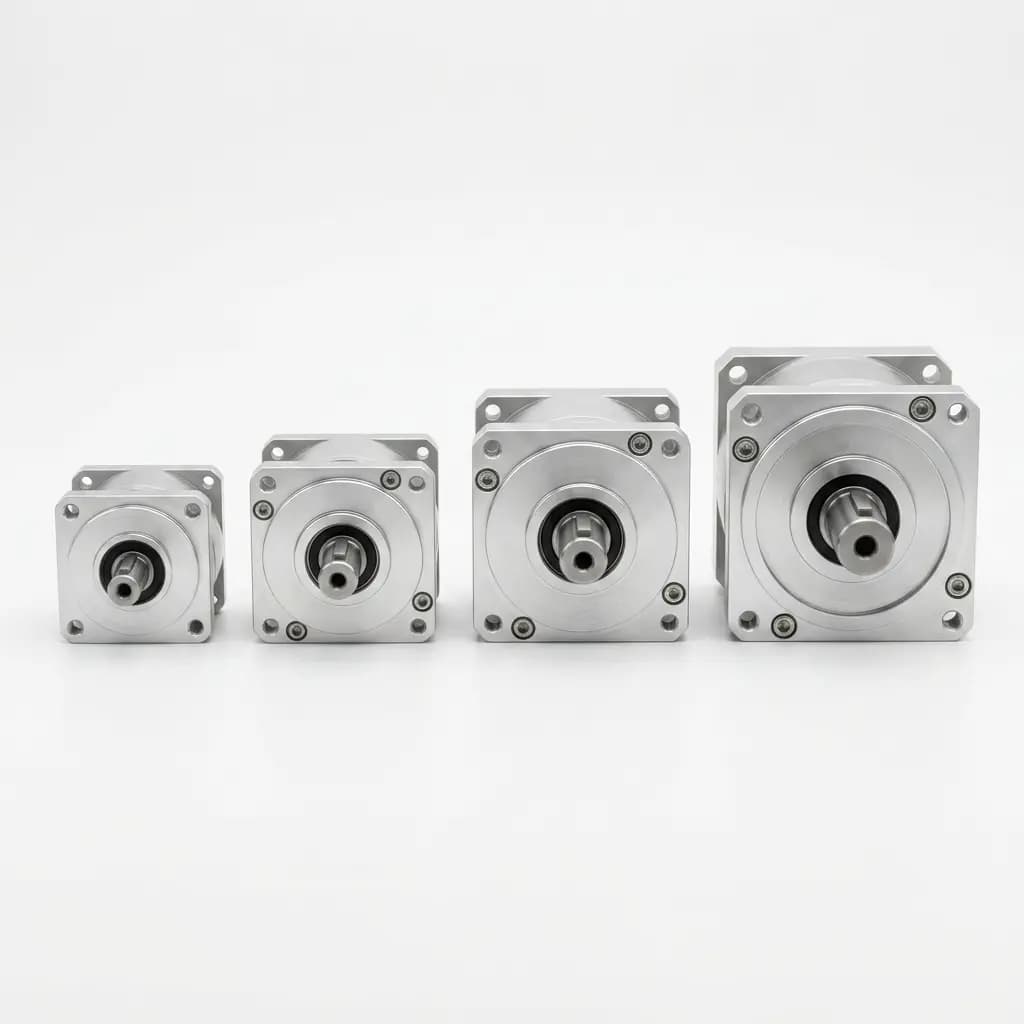
The Hidden Cost of Over-Specifying Backlash: A Procurement Guide
A practical July 2026 checklist for deciding when <=1 arc-min backlash is justified, when 3-8 arc-min is enough, and what evidence procurement should request before approving a premium gearbox.
Procurement takeaway: A <=1 arc-min gearbox is sometimes the correct choice, but it should not be the default line item for every servo axis. In many packaging, conveyor, indexer, AGV/AMR, and preload-dominated axes, a documented 3-8 arc-min gearbox can meet the real positioning budget with shorter sourcing paths and a wider supplier pool.
Scope and limits, updated July 2026: This guide is written for OEM procurement teams, application engineers, and sourcing managers buying low backlash planetary gearboxes. The cost and lead-time ranges below are RFQ planning ranges, not universal price promises. Always validate with the supplier's current catalog, test method, duty cycle, motor match, and application torque.
When an engineering team designs a new automated machine, there is a natural tendency to specify the tightest available precision "just to be safe." For servo planetary gearboxes, that usually appears as a premium <=1 arc-min backlash requirement.
The problem is that backlash is only one part of positioning accuracy. Frame size, torsional stiffness, bearing support, control-loop feedback, load direction, reversal frequency, and tool-center distance often matter more than the catalog backlash number. Buying the tightest number can hide the actual problem while narrowing the approved vendor list.
Use this guide as a procurement audit. It helps you ask a better question: what backlash class is justified by this axis, and what proof do we need before paying for a premium precision class?
 Right-sizing the backlash class can move a project from custom or premium-only supply into a standard catalog lane.
Why the Last Arc-Minute Costs More
Dropping from 8 arc-min to 5 arc-min is usually a normal precision upgrade. Dropping from 3 arc-min to <=1 arc-min is a different conversation.
At that level, the gearbox manufacturer has less room for ordinary tolerance stack-up across the sun gear, planet gears, ring gear, carrier, bearings, and housing. More parts need tighter machining, more measurement, more selective assembly, and more end-of-line inspection. The supplier may also need to control lubrication, preload, and thermal behavior more carefully because a tighter mesh can increase friction and sensitivity to operating conditions.
That is why "tighter backlash" rarely behaves like a linear cost slider. It changes the manufacturing route and the supplier pool.
| Backlash class | Better fit for | Procurement impact | Typical evidence to request | Watch-out |
|---|---|---|---|---|
| <=1 arc-min | High-dynamic robot joints, precision interpolation, compact axes with frequent reversal | Highest supplier qualification burden; often premium catalog or custom lane | Hysteresis curve, test torque, stiffness data, repeatability test, mounting limits | Can be overkill if the load is always biased in one direction |
| <=3 arc-min | CNC auxiliary axes, laser or inspection stages, higher-end packaging axes | Premium but broadly available from established precision suppliers | Backlash test method, torsional stiffness, output bearing load, thermal rating | Still not enough if the frame size is too small and twists under load |
| 3-5 arc-min | Servo indexers, moderate reversal axes, many pick-and-place transfer motions | Often the best balance of precision, cost, and availability | Application sizing sheet, inertia match, emergency-stop torque, life estimate | Confirm tool-tip error rather than catalog backlash alone |
| 5-8 arc-min | Conveyors, AGV/AMR wheel drives, rotary tables with preload, general automation | Wider supplier pool and shorter sourcing path in many RFQs | Load direction, duty cycle, holding-torque margin, encoder architecture | Not suitable for high-frequency reversal with visible deadband |
| 8-12 arc-min | Pump drives, extruders, slow adjusters, tensioned web rollers | Standard catalog options are usually easier to qualify | Service factor, lubrication, bearing load, continuous torque | Avoid on axes that reverse under cutting or pressing load |
| >12 arc-min | Non-positioning drives, manual adjusters, low-duty auxiliary motion | Lowest precision burden; verify mechanical fit first | Torque, speed, mounting, environmental limits | Do not approve for servo contouring by ratio alone |
Convert Arc-Minutes Into Actual Error
The simplest way to make the discussion objective is to convert angular backlash into linear motion at the point that matters.
One arc-minute equals 1/60 of a degree. In radians, that is about 0.0002909. Linear lost motion is approximately:
linear error = radius or lever arm x backlash in radiansFor example, at a 300 mm arm length:
- 1 arc-min is about 0.087 mm.
- 3 arc-min is about 0.262 mm.
- 8 arc-min is about 0.698 mm.
At a 2,000 mm arm length, the same angular clearance becomes much more serious:
- 1 arc-min is about 0.582 mm.
- 3 arc-min is about 1.745 mm.
- 8 arc-min is about 4.654 mm.
This is why the same <=3 arc-min gearbox can be reasonable on a compact indexer and unacceptable on a long robot arm. Procurement should ask for the lever arm, output radius, or screw/pulley conversion before approving a premium backlash number.
When <=1 Arc-Min Is Justified
Do not treat this article as permission to downgrade every gearbox. A true <=1 arc-min requirement can be justified when the backlash error directly appears at the product, tool path, or inspection result.
Use the premium class when the axis has most of these traits:
- Frequent reversing under load: The motor changes direction rapidly while torque is still applied, so deadband becomes shock, chatter, or lost contouring.
- Long moment arm: Small angular movement at the reducer becomes visible linear movement at the tool center point.
- Interpolated motion: Two or more axes must coordinate through curves, circles, sealing paths, cutting profiles, or inspection scans.
- No external preload: Gravity, spring force, web tension, or process force does not consistently hold the gear teeth against one flank.
- The measurement loop is at the motor: If feedback is only on the motor side, the controller cannot directly see lost motion after the gearbox.
This is where a supplier's single catalog number is not enough. Ask for the test torque, measurement method, torsional hysteresis curve, and stiffness value. Apex Dynamics' gearbox accuracy guide is useful because it separates backlash, lost motion, and stiffness instead of treating them as one number.
When 3-8 Arc-Min Is Often Enough
Many industrial axes do not benefit from paying for the tightest backlash class. The better spec is the one that fits the mechanical behavior of the axis.
Good candidates for a 3-8 arc-min review include:
- Unidirectional continuous motion: Conveyors, pumps, extruders, and many feed systems keep torque on one side of the gear tooth. Clearance is present, but it may not appear as bidirectional positioning error during normal operation.
- Gravity-loaded Z axes: A vertical axis that is always pulled in one direction by gravity may be mechanically preloaded during most moves.
- Tensioned web or roller systems: Web tension can bias the gear train and reduce practical deadband at the process point.
- AGV/AMR wheel drives: Many mobile robot drives need torque density, shock resistance, bearing capacity, and compact packaging more urgently than <=1 arc-min precision.
- Dual-loop feedback: If a linear encoder or external scale closes the loop at the load, the control system may compensate for part of the gearbox lost motion. This still needs servo tuning and stability validation.
Neugart's low-backlash gearbox overview is a good reminder that low backlash is a family of application-specific precision classes, not a single universal target. STOBER's backlash explainer also highlights the distinction between backlash as tooth clearance and the broader behavior of a drive system.
Procurement Action Plan: The Backlash Audit Checklist
Before accepting a requisition for a premium low backlash gearbox, review these points with the lead engineer and the gearbox supplier:
- Define the error budget: What portion of total machine error is assigned to gearbox backlash, and what portion belongs to bearings, frame deflection, screw error, belt stretch, encoder resolution, and servo tuning?
- Convert arc-min to mm: What is the real tool-tip error at the working radius or translation mechanism?
- Confirm direction changes: Does the axis reverse under meaningful torque, or does it mostly run one way?
- Check preload: Is the gearbox naturally biased by gravity, friction, spring force, web tension, or process force?
- Separate backlash from stiffness: Is the problem clearance backlash, or is the smaller frame twisting under torque?
- Request test evidence: Can the supplier provide a backlash measurement method, hysteresis curve, stiffness data, and inspection record for the selected frame and ratio?
- Compare supplier lanes: How many qualified suppliers can quote <=1 arc-min, <=3 arc-min, and 5-8 arc-min versions with the same ratio, flange, motor adapter, and output load rating?
- Lock the approval rule: If engineering accepts a wider backlash class, document the application reason so the change does not get reversed during the next urgent RFQ.
RFQ Language That Prevents Overbuying
Weak RFQ language says:
"Need low backlash planetary gearbox, <=1 arc-min preferred."
Better RFQ language says:
"Quote two options for the same ratio, motor adapter, mounting interface, rated torque, emergency-stop torque, and output bearing load: Option A <=3 arc-min, Option B 5-8 arc-min. Provide backlash test method, torsional stiffness, hysteresis/lost-motion data if available, and lead time. Application is a mostly unidirectional conveyor/indexer with external load preload; final approval depends on tool-tip error calculation."
That wording gives suppliers a measurable target and gives procurement a way to compare value. It also prevents the cheapest quote from winning by silently changing frame size, bearing capacity, lubrication, or service factor.
Supplier Evidence: What to Ask For
For a serious low backlash gearbox RFQ, ask for more than a PDF catalog page:
| Evidence item | Why it matters | Acceptable response | Red flag |
|---|---|---|---|
| Backlash test method | Catalog numbers vary by torque and measurement setup | Method states torque, direction, fixture, and unit | "Factory standard" with no method |
| Torsional stiffness | A low backlash gearbox can still wind up under load | Nm/arc-min or equivalent stiffness curve | Backlash number only |
| Hysteresis or lost-motion curve | Shows practical behavior through torque reversal | Curve or batch test report for the family | No evidence for precision claim |
| Output bearing data | Prevents underframed substitutions | Radial/axial load limits and life estimate | Same backlash but smaller bearing package |
| Thermal/duty-cycle limit | Tighter meshes and high duty can raise heat | Continuous torque, speed, lubricant, temperature assumptions | Peak torque used as normal operating torque |
| Motor adapter drawing | Prevents assembly surprises | Confirmed pilot, bolt circle, input bore, key/clamp details | "Compatible" without drawing |
Frequently Asked Questions (FAQ)
Q: Our engineers say higher backlash causes premature wear. Is this true?
A: Sometimes. In a high-dynamic reversing axis, excessive clearance can create impact, noise, and control instability. In a one-direction or preloaded axis, the wear driver may be lubrication, bearing load, duty cycle, contamination, overload, or misalignment rather than the backlash number itself. Ask engineering which failure mode they are protecting against.
Q: Can we replace a strain-wave or harmonic-drive gearbox with a planetary gearbox?
A: Only after an architecture review. A planetary gearbox may offer attractive torque density, stiffness, bearing options, service life, or cost in some applications, but it is not a drop-in substitute for a zero-backlash strain-wave reducer. Check ratio range, envelope, hollow shaft needs, inertia, stiffness, bearing support, reversal behavior, control tuning, and mounting geometry before approving a replacement.
Q: How do I know if a Chinese supplier's "3 arc-min" claim is legitimate?
A: Ask for the backlash inspection method, sample report, and torsional hysteresis or lost-motion data for the relevant frame and ratio. A supplier does not need to be a famous brand to be credible, but it should be able to explain how the number was measured and what torque level was used.
Q: Is torsional stiffness more important than backlash?
A: It depends on the failure mode. If an axis reverses through a small deadband at low torque, backlash may dominate. If the axis carries high torque or a long lever arm, torsional stiffness can dominate the actual tool-tip error. The best RFQ asks for both.
Q: What is the safest way to downgrade a backlash spec?
A: Do not downgrade by opinion. Create a comparison: current spec, proposed spec, calculated tool-tip error, load direction, reversal frequency, stiffness, feedback location, and test plan. If the numbers still fit the machine tolerance, run a sample test before changing production purchasing rules.
A Practical Approval Rule
Use this simple rule in sourcing meetings:
- Keep <=1 arc-min when backlash directly affects product quality, contour accuracy, robot tool-center position, or inspection result.
- Challenge <=1 arc-min when the axis is unidirectional, externally preloaded, slow, non-contouring, or measured by load-side feedback.
- Never approve a lower-cost gearbox by backlash alone. Confirm frame size, stiffness, bearings, duty cycle, mounting, thermal margin, and supplier test evidence.
That approach lets procurement reduce avoidable over-specification without creating a hidden reliability problem.
Need a Second Opinion on a Gearbox Spec?
If your RFQ is stuck between an engineering request for <=1 arc-min and a purchasing target for better cost or lead time, send us the ratio, motor model, load torque, duty cycle, mounting drawing, and current backlash target. We can help compare practical low backlash gearbox options and identify which specs should stay strict and which ones can be widened.
Contact our application engineers for a specification audit today.
Sources
Author

Categories
More Posts
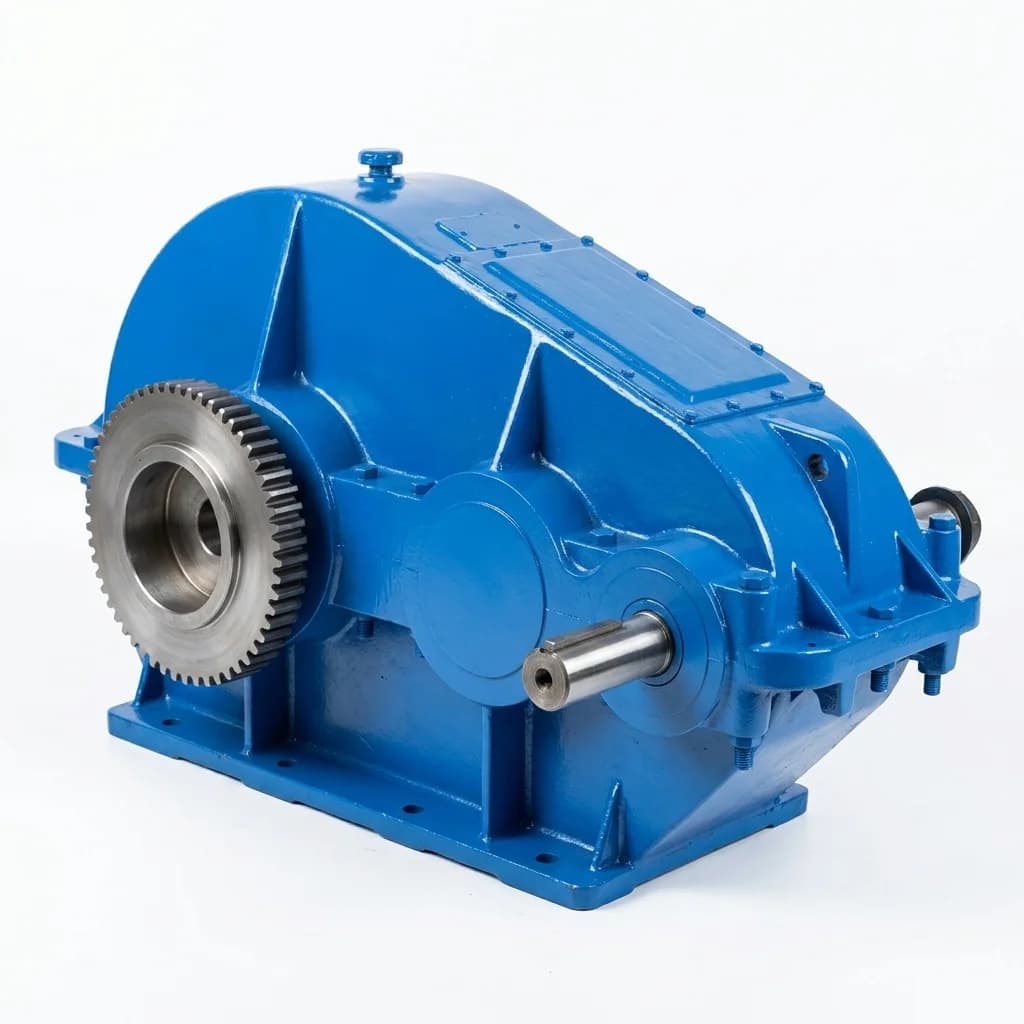
Specifying Low Backlash Gearboxes for AGV and AMR Wheel Drives
Choose low backlash gearboxes for AGV/AMR wheel drives with a 2026 checklist for radial loads, shock ratings, bearings, backlash, and RFQ review steps.
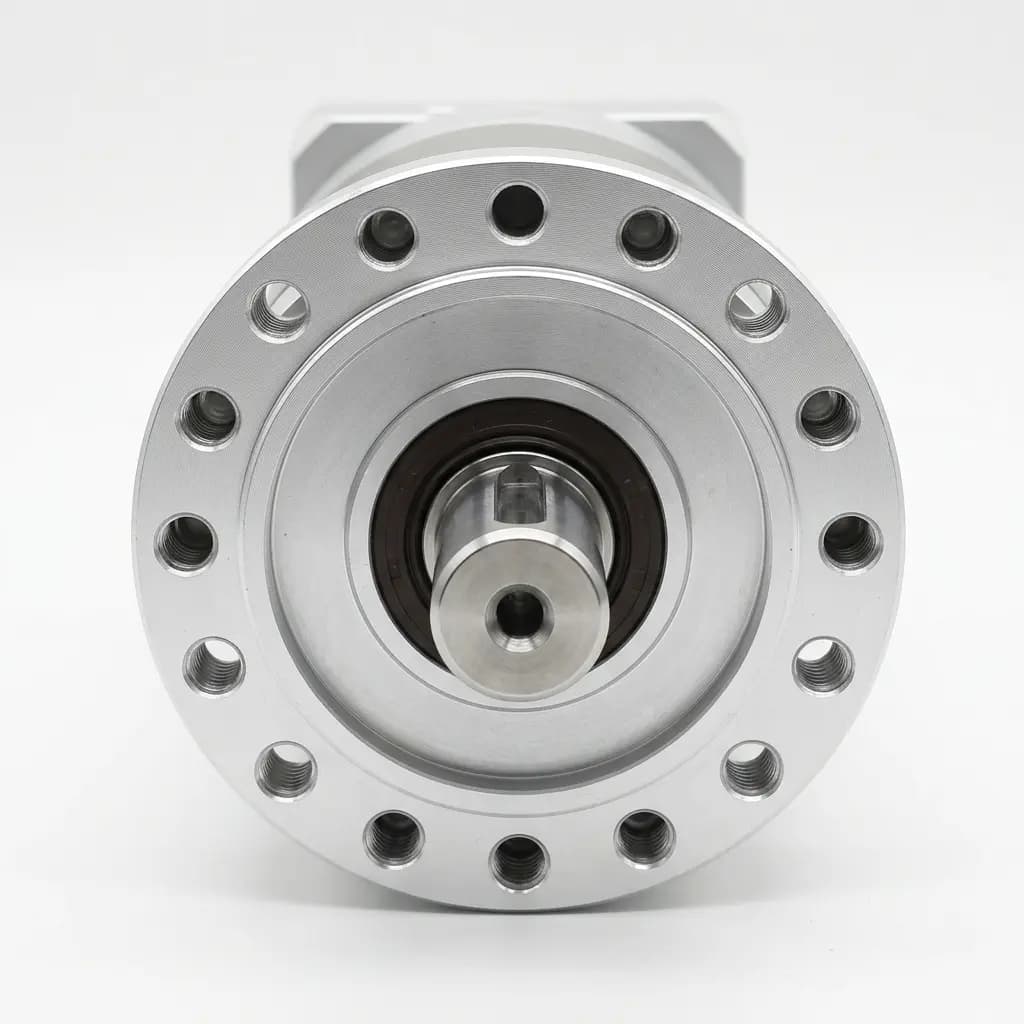
2026-W20 Industrial Update: Low-Backlash Reducer Sourcing Has Shifted to Classification and Compliance Control
2026-W20 update for low-backlash reducer sourcing: U.S./EU compliance shifts, APAC demand signals, and a buyer checklist for safer servo/stepper substitutions.
Low-Backlash Reducer Update: EU Machinery Regulation Gap & US Import Signals
Assess precision reducer sourcing risks for 2026-W25, focusing on the EU 2023/1230 harmonised standards gap, US import volume spikes, and motor-reducer compatibility checks.