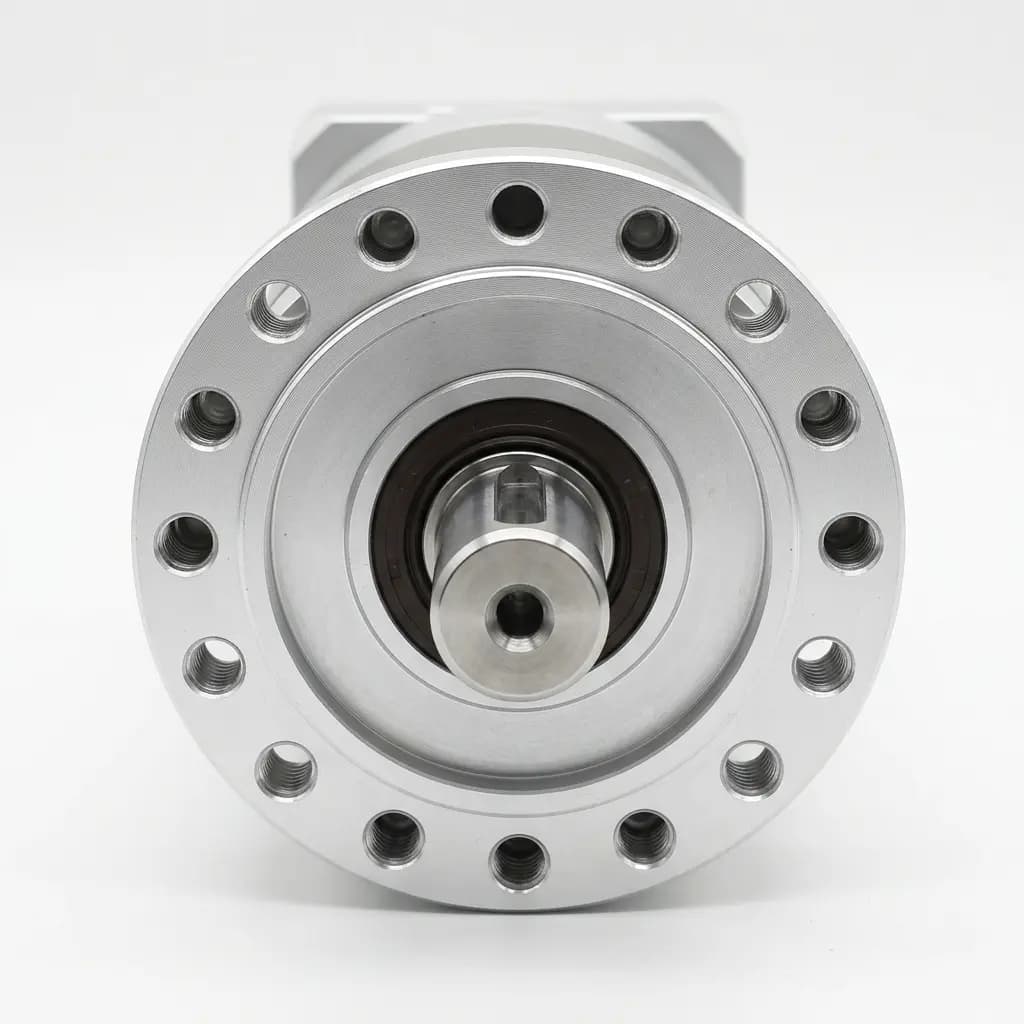
2026-W21 Industrial Update: Documentation Proof Now Controls Low-Backlash Reducer Substitution Risk
2026-W21 low-backlash reducer update for US, EU, and APAC: HTS corrections, CBAM documentation, and servo/stepper retest gates to reduce substitution risk.
One-Line Decision: For Q3 2026 shipments into the U.S. or EU, approve low-backlash planetary gearbox substitutions only after three proofs are complete: HTS path, carbon-cost documentation path, and servo/stepper retest.
Scope: low backlash planetary gearboxes, precision reducers, servo/stepper compatibility, replacement risk, and buyer-facing sourcing changes.
Markets: United States + European Union + Asia-Pacific industrial automation.
Research window: 2026-04-24 to 2026-05-24 (last 30 days).
Week target: 2026-W21.
Updated: 2026-05-24.
Start here: Run the cross-reference workflow for shortlisting first, then escalate unresolved destination risks to engineering review.
What Changed (Last 30 Days)
| Date | Change | Primary source signal | Why buyer teams should care this week |
|---|---|---|---|
| 2026-04-29 | U.S. BIS published technical corrections to HTS treatment linked to Proclamation 11021. | Notice says two technical corrections + clarification; effective timing and heading updates are explicit. | Substitute SKUs can clear differently if declaration logic is stale; this is an execution risk, not a legal footnote. |
| Effective from 2026-04-06 | The corrections apply to goods entered/withdrawn from warehouse on or after 12:01 a.m. ET, April 6, 2026. | Effective-date language is explicit in the notice. | Open POs and in-transit decisions need entry-date and heading recheck. |
| 2026-05-13 | EU published the implementing act feedback step on carbon price paid in third countries (4-week consultation). | CBAM page and TAXUD news item set a consultation timeline ending 2026-06-10. | Documentation burden is moving toward proof quality (currency conversion, proof of payment, certifier eligibility), not only commodity scope checks. |
| 2026-05-05 | U.S. Census FT900 (March 2026) reported higher imports and capital-goods growth. | March imports: $381.2B (+$8.7B m/m); imports of goods +$10.6B; capital goods +$2.1B. | Import pressure remains high; late substitutions can still trigger cost and lead-time volatility. |
| 2026-04-30 | Nabtesco Q1 FY2026 showed PRG orders YoY +21%, QoQ -4% with regional uncertainty notes. | Q1 PRG orders: QoQ -4%, YoY +21%; plant utilization data and Q&A statements are explicit. | Recovery exists, but it is uneven by region/program timing; qualification shortcuts remain risky. |
Decision-Level Summary
| Decision question | 30-day signal | Confidence | Immediate control |
|---|---|---|---|
| Can we approve equivalent reducers by backlash number only? | No. Trade/compliance and carbon-document pathways changed faster than catalog specs. | High | Add a mandatory multi-gate release checklist. |
| Is U.S. risk mainly tariff rate size? | Not only. Technical filing correctness and heading logic now matter at shipment execution level. | High | Pre-clear HTS mapping per substitute SKU before PO release. |
| Is EU risk mainly "in/out of CBAM sector"? | No. Carbon-price evidence workflow is becoming a practical gate. | Medium-High | Add supplier evidence package requirements for third-country carbon cost claims. |
| Is APAC supply "fully normal"? | Not yet. Order trend is positive YoY but mixed QoQ with regional timing uncertainty. | Medium | Lock alternates by motor family and duty profile, not by flange fit alone. |
60-Second Take
- Backlash equivalence is no longer enough; release now depends on documentation proof and control-loop retest.
- U.S. substitution approvals should verify HTS path against the effective date already in force (2026-04-06).
- EU-bound programs should treat CBAM carbon-cost evidence as a release gate, not a post-PO paperwork task.
- APAC recovery is positive but uneven; keep two qualified alternates for every critical motor family and duty profile.
Timeline: Policy + Demand + Supply Signals
Why This Matters for Buyers, Specifiers, and Importers
| Control layer | Old default | New W21 requirement |
|---|---|---|
| Mechanical selection | Backlash + ratio | Backlash + ratio + torsional stiffness + reflected inertia compatibility |
| U.S. import execution | Broker handles at shipment stage | Engineering + procurement must pre-map HTS path for each approved substitute |
| EU import readiness | Scope check only | Scope + carbon-price evidence workflow readiness |
| Supplier fallback logic | "Equivalent family" allowed | Destination-specific approved matrix by motor family + application duty profile |
| Release governance | Single-function approval | Cross-functional sign-off: controls + mechanical + procurement + trade/compliance |
Regional Impact Matrix (US + EU + APAC)
| Region | What changed most | Typical failure mode | Buyer action now |
|---|---|---|---|
| United States | HTS technical correction execution | Substitute passes engineering but fails declaration logic or creates landed-cost surprise | Run pre-entry HTS workbook per approved substitute |
| European Union | CBAM implementation detail is moving from policy to operational evidence | Supplier cannot support carbon-cost deduction documentation in time | Add evidence checklist in RFQ award gate |
| Asia-Pacific | PRG demand recovery remains uneven across programs/regions | Teams assume universal lead-time normalization and skip alternate validation | Lock two qualified alternatives per critical axis |
| Cross-region programs | One BOM, multiple destination constraints | Same reducer part has different risk by destination | Use destination-specific sourcing playbooks |
Internal Playbooks and Related Pages
- Pre-screen substitute model equivalence in the cross-reference workflow, then lock destination-specific release gates.
- Validate interface and series-fit constraints in Helical Planetary Gearbox specs and Spur Planetary Gearbox specs.
- Recheck mechanical equivalence risks using Decoding Planetary Gearbox Accuracy and Helical vs. Spur engineering trade-offs.
- Reconfirm thermal and duty-cycle boundaries with Thermal Management and Duty Cycle Sizing and the planetary gearbox learning guide.
- Use the prior 2026-W20 market update for week-over-week policy context before PO sign-off.
Replacement Approval Flow (Buyer-Facing Gate Sequence)
Action Checklist (Who Should Act Now)
| Owner | Action | Deadline | Output |
|---|---|---|---|
| Mechanical lead | Freeze destination-specific substitute list by motor family and duty profile. | 5 business days | Approved substitute matrix |
| Controls lead | Re-run settle/overshoot tests for each approved substitute frame ratio. | 7 business days | Compatibility pass/fail sheet |
| Procurement manager | Add HTS path + CBAM evidence file checks to RFQ award gate. | Immediate | Updated sourcing SOP |
| Trade/compliance | Pre-clear U.S. entry headings and exception logic for top-volume substitutes. | Before next shipment release | Entry playbook by SKU |
| Program manager | Split risk review by destination (U.S./EU/APAC) before PO issue. | This week | Destination risk log |
10-point buyer checklist before substitution release
- Has U.S. HTS path been validated for the substitute SKU?
- If destination is EU, is CBAM document readiness verified?
- Is reflected inertia still inside servo/stepper tuning limits?
- Is torsional stiffness validated at actual duty torque, not catalog no-load only?
- Are entry-effective dates checked against planned shipment timing?
- Is the supplier evidence pack complete (material/billing/carbon-cost docs where needed)?
- Is there a second approved substitute for the same motor family?
- Has landed-cost sensitivity been tested under alternate declaration outcomes?
- Are spare parts and full assemblies treated under separate import logic where required?
- Is final sign-off cross-functional instead of single-team?
Risks and Limits (Evidence Gaps and Boundaries)
| Topic | What we know | Evidence gap / boundary | Decision implication |
|---|---|---|---|
| U.S. technical correction | Published notice, explicit effective timing, explicit heading adjustment text. | Final entry outcomes still depend on exact product facts and filing practice per shipment. | Use this page as procurement engineering guidance, not legal advice. |
| EU CBAM implementation | 13 May 2026 public-consultation step and documentation topic are explicit. | Final operational burden for specific reducer shipments depends on importer role and sector details in each chain. | Build evidence file discipline now to avoid late-stage surprises. |
| Demand pressure | FT900 shows import and capital-goods increases in March 2026 release. | Macro data is not a reducer-SKU demand forecast. | Use macro signal to size buffer policy, not to forecast one exact model lead time. |
| APAC supply outlook | Nabtesco PRG trend is positive YoY but mixed QoQ; Q&A flags uncertainty in North America automotive capex timing. | Public disclosures cannot provide your exact lead-time by each frame/shaft/ratio. | Keep alternate validation active; do not assume universal lead-time normalization. |
FAQ
1) Is this week's change mainly a "trade policy" issue?
No. It is a release-governance issue: engineering compatibility, declaration correctness, and documentation quality now move together.
2) Can we continue emergency substitutions?
Yes, but only with a shortened multi-gate review. Skipping trade/compliance and control-loop checks is now the highest-risk path.
3) Does the U.S. technical correction mean every substitute pays more duty?
Not automatically. It means declaration logic and heading treatment must be current and verified for each SKU.
4) Why should reducer buyers care about EU CBAM process updates now?
Because documentation workflow maturity affects import execution timing and cost exposure, even before weekly pricing starts in 2027.
5) Are APAC supply conditions stable enough to reduce alternate qualification work?
Not yet. Official signals show recovery with uneven rhythm; alternate qualification remains necessary.
6) Is backlash still important?
Yes, but backlash alone is no longer an approval criterion for cross-market substitutions.
7) What is the minimum change for a small machine builder?
Add one mandatory substitution release gate that requires both controls and trade/compliance sign-off.
8) What should procurement ask suppliers first this week?
Ask for substitute-specific documentation readiness (classification path support and carbon-cost evidence capability where relevant), not just a catalog equivalent claim.
Sources
| Title | Institution | Date | URL |
|---|---|---|---|
| Notice of Technical Corrections to the HTSUS for Duties Imposed by Presidential Proclamation 11021 (FR Doc. 2026-08297) | U.S. Department of Commerce, BIS / Federal Register Public Inspection | Filed 2026-04-27; Published 2026-04-29 | https://public-inspection.federalregister.gov/2026-08297.pdf |
| Strengthening Actions Taken To Adjust Imports of Aluminum, Steel, and Copper Into the United States (Proclamation 11021, FR Doc. 2026-06960) | The White House / Federal Register Public Inspection | Published 2026-04-09 | https://public-inspection.federalregister.gov/2026-06960.pdf |
| U.S. International Trade in Goods and Services, March 2026 (FT900) | U.S. Census Bureau + U.S. BEA | 2026-05-05 | https://www.census.gov/foreign-trade/Press-Release/current_press_release/ft900.pdf |
| Top Trading Partners - March 2026 Trade in Goods | U.S. Census Bureau, Foreign Trade | March 2026 dataset page | https://www.census.gov/foreign-trade/statistics/highlights/topcm.html |
| Carbon Border Adjustment Mechanism (Latest developments and importer threshold details) | European Commission, DG TAXUD | Accessed 2026-05-24 (includes updates dated 2026-05-13 / 2026-05-07) | https://taxation-customs.ec.europa.eu/carbon-border-adjustment-mechanism_en |
| Carbon price paid in Third Countries (CBAM implementing-act consultation step) | European Commission, DG TAXUD | 2026-05-13 | https://taxation-customs.ec.europa.eu/news/carbon-price-paid-third-countries-2026-05-13_en |
| Price of CBAM certificates (Q1 2026 price table) | European Commission, DG TAXUD | Q1 price published 2026-04-07 | https://taxation-customs.ec.europa.eu/carbon-border-adjustment-mechanism/price-cbam-certificates_en |
| Results Briefing Material for FY2026 Q1 (PRG order trend and plant utilization) | Nabtesco Corporation | 2026-04-30 | https://www.nabtesco.com/cms/wp-content/uploads/Results_Briefing_Material_for_FY2026_Q1e.pdf |
| Q&A for FY2026 Q1 Results Briefing | Nabtesco Corporation | 2026-04-30 | https://www.nabtesco.com/cms/wp-content/uploads/Results_Briefing_QA_for_FY2026_Q1_e.pdf |
Next-Step This Week
- Run substitute candidate filtering in the cross-reference workflow.
- Apply the 10-point checklist above before PO release for each destination.
- Escalate any unresolved multi-region substitution to engineering review.
Author

More Posts
Low-Backlash Reducer Update: Zero-Backlash AMR Gate
Use this 2026-W23 low-backlash reducer update to compare planetary, cycloidal, and AMR drive substitutes across US, EU, and APAC sourcing risks.
Specifying Low Backlash Gearboxes for AGV and AMR Wheel Drives
Choose low backlash gearboxes for AGV/AMR wheel drives with a 2026 checklist for radial loads, shock ratings, bearings, backlash, and RFQ review steps.
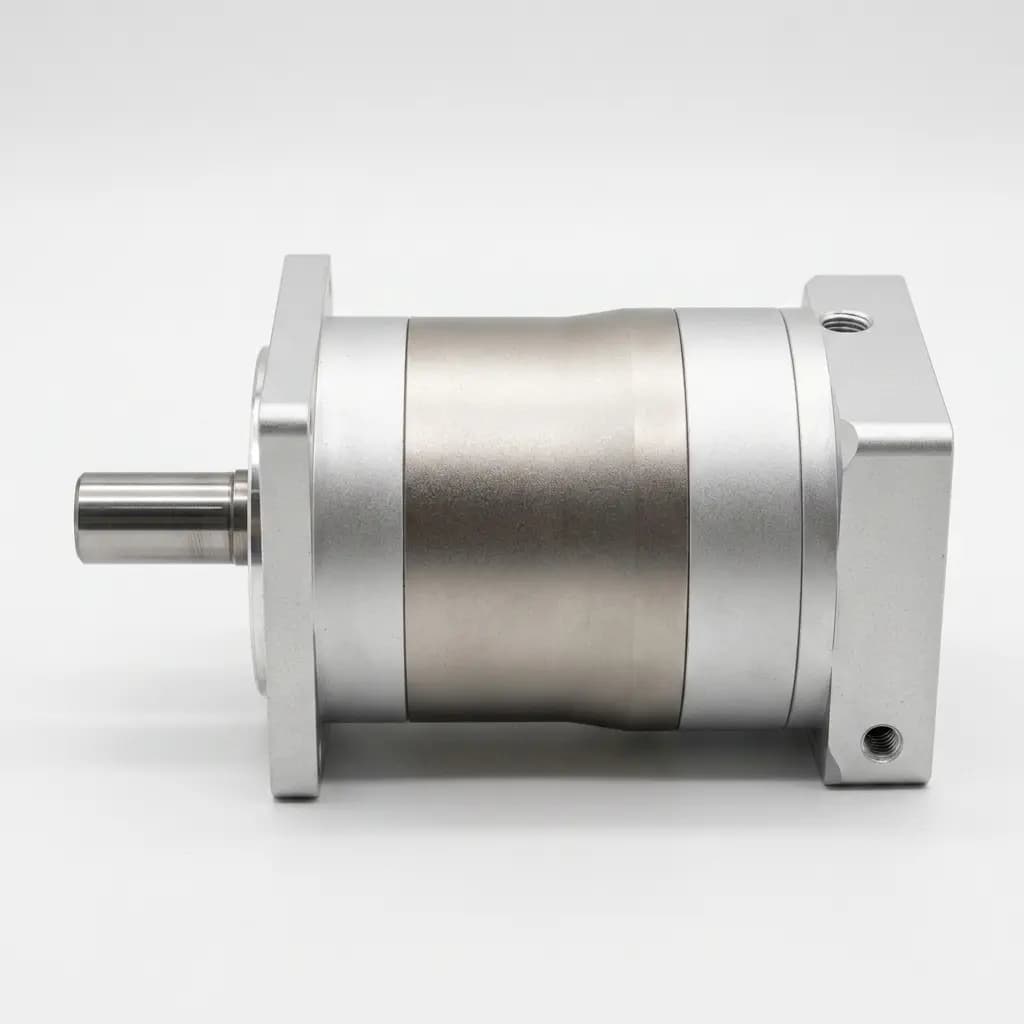
Decoding Planetary Gearbox Accuracy: True Backlash vs. Lost Motion
Stop sizing high-precision axes based on a single backlash number. Learn how to read hysteresis curves and calculate real-world lost motion before your machine fails in the field.