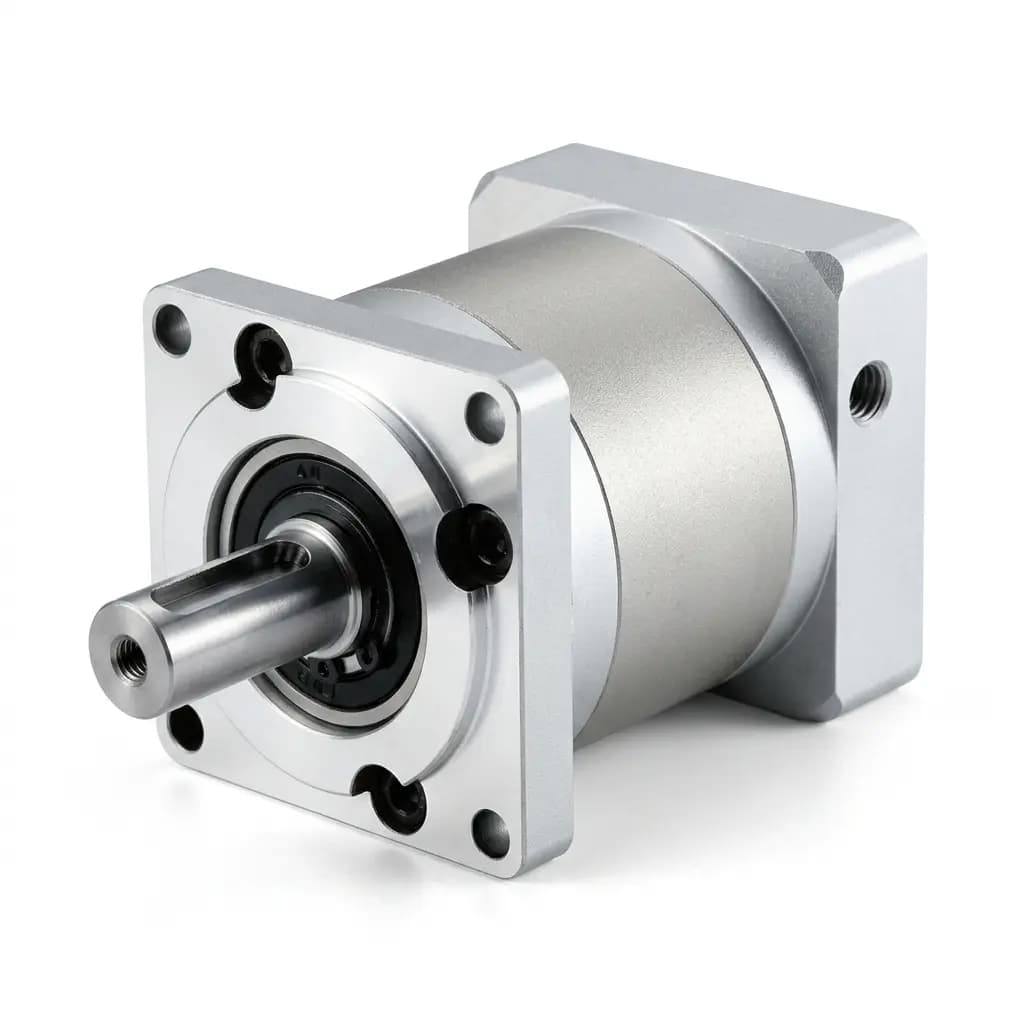
Planetary Gearbox Lubrication: Synthetic Grease vs. Oil, Churning Losses, Shaft Seals, and PFAS-Free Compliance
Compare synthetic grease vs. gear oil, churning losses, elastomer seal compatibility, and NSF 537 PFAS-free compliance for low-backlash planetary gearboxes.
Engineering & procurement takeaway: "Lubricated for life" is not a universal specification. In a low-backlash planetary gearbox, lubricant chemistry, fill volume, and shaft-seal elastomer selection directly govern churning heat, micropitting life, and leakage risk. For 2026 OEM programs, standard NSF H1 registration no longer guarantees PFAS-free or PTFE-free compliance—buyers must specify exact base-oil families, seal compounds, mounting orientation, and third-party verification such as NSF 537 where required. (Published: November 20, 2026)
Scope and limitations: This guide is written for mechanical engineers, maintenance leads, and procurement teams specifying inline and right-angle low-backlash planetary gearboxes across packaging, robotics, machine tools, and food/pharma automation. It provides a technical and sourcing framework for grease vs. oil selection, churning-loss awareness, seal compatibility, and compliance documentation. Specific fill quantities, relubrication intervals, and allowable continuous speeds must always be confirmed against the manufacturer's model-specific datasheet and thermal rating.
Need to validate a gearbox specification for continuous-duty speed, vertical mounting, or PFAS-free compliance? Send your operating parameters to our engineering team for a configuration and seal-compatibility review.
1. Why Planetary Gearbox Lubrication Fails Before Gear Teeth Do
In precision servo applications, buyers spend weeks auditing arc-minute backlash, torsional stiffness, and flange concentricity. Yet field failures in continuous-duty lines rarely begin with tooth breakage. They begin with lubricant starvation, thermal degradation, or shaft-seal leakage.
A planetary stage concentrates high torque into a compact housing with multiple simultaneous tooth meshes—sun-to-planet and planet-to-ring—plus needle or cylindrical roller bearings inside the planet carrier. Unlike a large open-sump industrial helical reducer, a compact precision planetary gearbox has minimal internal headspace and limited surface area for convective cooling.
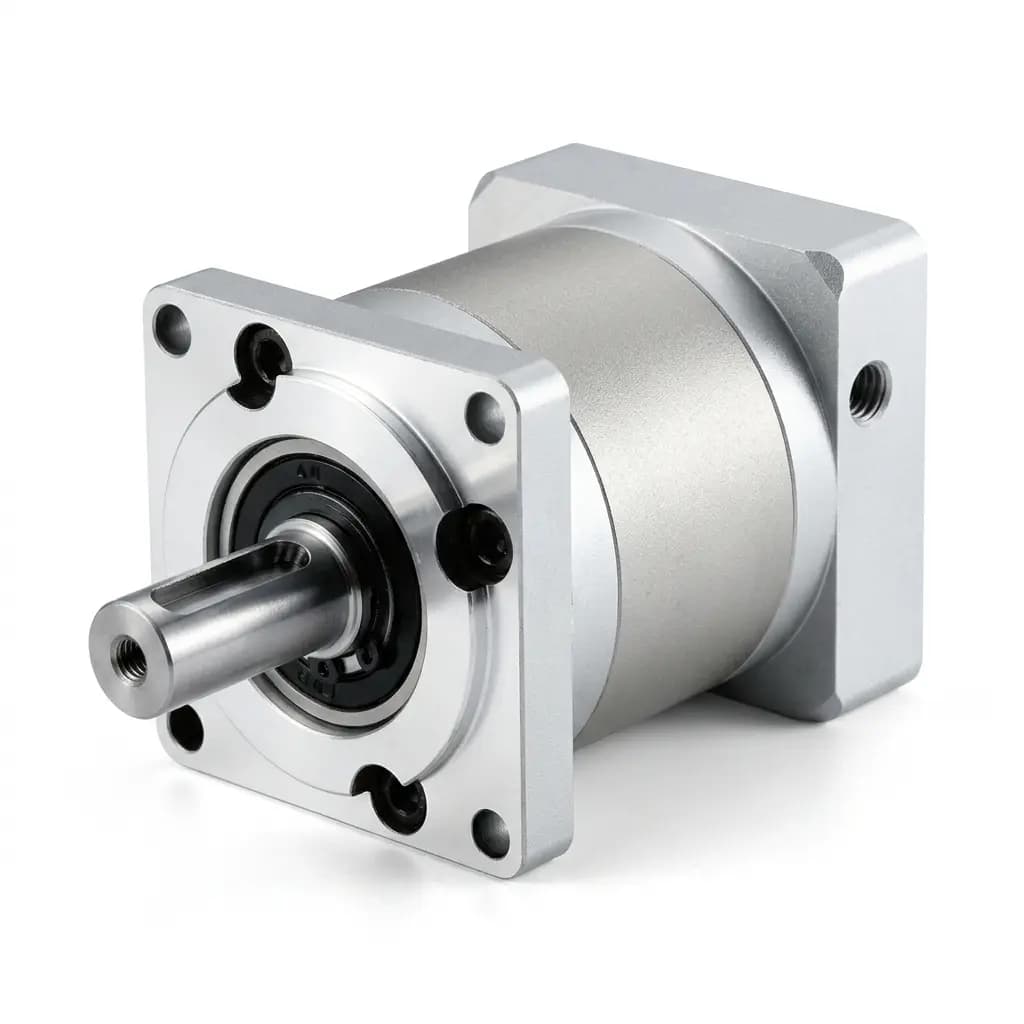
Figure 1: Output shaft and radial seal interface on a helical planetary gearbox. Seal friction, lip material, and internal lubricant pressure determine whether a "lubricated-for-life" unit stays sealed under thermal cycling.
When the lubricant or seal architecture is mismatched to the duty cycle, three failure chains appear quickly:
- Channeling and starvation: Stiff grease is pushed out of the gear mesh path at high input speeds and fails to flow back, leaving tooth flanks running boundary-lubricated.
- Churning overheating: Over-filled oil or high-viscosity grease creates parasitic viscous drag as the planet carrier sweeps through the sump, spiking housing temperature and oxidizing the base oil.
- Elastomer attack or lip wear: Incompatible base oils (especially certain polyalkylene glycols) swell or harden standard nitrile seals, causing weeping at the input or output shaft.
2. Synthetic Grease vs. Synthetic Gear Oil: Mechanics and Trade-Offs
Most precision planetary gearboxes ship from the factory with one of two lubrication strategies: semi-fluid synthetic grease (typically NLGI 000, 00, or 0, and occasionally NLGI 1 for slow-speed or heavily sealed units) or synthetic gear oil (PAO or PAG formulated to ISO 12925-1 / DIN 51517-3 CLP performance levels).
2.1 How grease behaves inside a planetary carrier
Grease is a two-phase system: a base oil suspended in a thickener matrix (such as lithium complex, polyurea, aluminum complex, or calcium sulfonate complex). Under shear in the gear mesh, the grease releases oil to lubricate the contact zone. Its major advantage is retention: it stays put in vertical or inverted mounting orientations, resists weeping past static housing joints, and simplifies "lubricated-for-life" assembly.
The trade-off is heat transfer and speed ceiling. Grease does not circulate by convection the way oil does. In high-speed continuous S1 duty—such as a 3,000 rpm servo input running 24/7—the planet carrier constantly shears the thickener matrix. If the grease is too stiff, it either channels away from the sun gear or generates substantial churning heat that stays trapped near the mesh.
2.2 How synthetic oil (PAO vs. PAG) behaves
Synthetic gear oils—primarily Polyalphaolefin (PAO) and Polyalkylene Glycol (PAG)—deliver lower fluid drag, superior heat transfer to the housing walls, and higher viscosity index (VI) stability across cold starts and hot steady-state operation. Under ISO 12925-1:2024 (which defines enclosed gear oil categories such as CKC, CKD, CKT, and CKPG) and DIN 51517-3, qualified synthetic oils provide high FZG scuffing resistance and micropitting protection (FVA 54/7).
However, oil-lubricated planetary gearboxes require oil-tight dynamic shaft seals, precise fill-level control tied to mounting orientation (horizontal B3/B5 vs. vertical V5/V6), and, in larger frame sizes, breathers or expansion bladders to manage internal pressure rise during warm-up.
2.3 Side-by-Side Comparison: Grease vs. PAO Oil vs. PAG Oil
| Selection Dimension | Semi-Fluid Synthetic Grease (NLGI 000–0) | Stiff Synthetic Grease (NLGI 1–2) | Synthetic PAO Gear Oil (ISO 12925-1 CKT) | Synthetic PAG Gear Oil (ISO 12925-1 CKPG) |
|---|---|---|---|---|
| Typical Duty Profile | Intermittent S5 servo & moderate continuous S1 | Low-speed, high-torque, or intermittent positioning | High-speed continuous S1 duty & heavy thermal loads | High-efficiency continuous duty & high sliding mesh |
| Churning Loss at High RPM | Moderate (shear-thins, but thickener adds drag) | High (risk of overheating or channeling dry) | Low (if fill level matches orientation) | Very low (high VI & low traction coefficient) |
| Heat Dissipation | Moderate (limited natural convection) | Poor (acts as a local thermal blanket) | High (circulates heat to housing walls) | High (circulates heat efficiently) |
| Mounting Orientation Sensitivity | Low (works in horizontal, vertical, or angled axes) | Very low (resists pooling) | High (requires exact fill volume for V5/V6 vertical) | High (requires exact fill volume for V5/V6 vertical) |
| Leakage & Sealing Demand | Moderate (resists weeping through static joints) | Low (forms a self-sealing collar at low speeds) | High (requires precision FKM/PTFE lip seals) | High (requires seal + internal paint compatibility) |
| Elastomer Compatibility | Good with NBR, HNBR, FKM (verify thickener) | Good with NBR, HNBR, FKM | Broad compatibility with FKM, HNBR, and NBR | Aggressive toward standard NBR and some coatings; use FKM/PTFE |
| Maintenance Expectation | Typically lubricated for life within rated envelope | Lubricated for life in low-duty cycles | Sealed for life in small frames; oil-change in large frames | Sealed for life or scheduled change; never mix with mineral/PAO |
As covered in our thermal management and duty cycle sizing guide, substituting a heavier grease into a continuous-duty S1 axis to "stop a minor seep" frequently backfires: the added churning drag elevates operating temperatures, accelerates oxidation, and destroys the shaft seal anyway.
3. Churning Losses, Input Speed, and Mounting Orientation
Why do two identical gearboxes show a 15°C difference in housing temperature on the same machine? Often the cause is churning loss combined with mounting orientation.
Churning loss is the parasitic power consumed when the planet carrier, planet gears, and bearings displace lubricant without doing useful mechanical work. Because churning drag scales sharply with rotational speed and immersion depth, input RPM—not output RPM—is the critical variable. A 100:1 two-stage planetary gearbox driven at 4,000 rpm has an input sun gear and first-stage carrier spinning rapidly even though the output flange turns at only 40 rpm.
Orientation-Driven Risks Buyers Miss
- Vertical Output Shaft Down: Gravity pools lubricant directly on top of the output shaft seal. If an oil-filled gearbox is mounted vertically without an appropriate seal architecture (such as double-lip FKM with a grease barrier) or a semi-fluid grease fill, weeping at the output flange is likely once the housing warms up.
- Vertical Output Shaft Up: The upper sun-gear mesh and input bearing can suffer from lubricant starvation if the oil level was sized only for horizontal mounting.
- Cold Ambient Starts (-20°C to 0°C): High-viscosity mineral or stiff NLGI 2 greases can spike no-load starting torque, tripping servo drive overcurrent alarms during morning start-up. Low-pour-point synthetic PAO oils or low-temperature synthetic greases eliminate cold-start tripping.
4. Shaft Seals and Elastomer Compatibility
A gearbox lubricant specification is incomplete without the dynamic shaft seal specification. In precision planetary gearboxes, radial shaft seals sit on both the high-speed motor input shaft and the high-torque output shaft.
Two common procurement mistakes cause premature seal failures:
- Treating "viton/FKM" or "PTFE" as interchangeable drop-ins: FKM resists high temperatures and aggressive synthetic oils (including PAG), but standard FKM compounds have higher lip friction and poorer low-temperature flexibility below -20°C unless specialized low-temperature grades are used. PTFE lip seals handle extreme surface speeds and aggressive washdown chemistry, but they require harder, smoother shaft counterfaces and are less forgiving of shaft runout or scratches during motor installation.
- Mixing incompatible fluids during maintenance or second-sourcing: Topping up a PAG-filled gearbox with PAO or mineral gear oil causes sludge, additive precipitation, and seal swelling.
Seal Material & Lubricant Compatibility Matrix
| Seal Material | Max Typical Temp Range | Friction & Speed Behavior | PAO Compatibility | PAG Compatibility | Key Procurement Caveat |
|---|---|---|---|---|---|
| NBR (Nitrile) | -30°C to +100°C | Low cost, moderate friction | Good | Poor (risk of swelling/softening) | Avoid in hot S1 servo or PAG oil service |
| HNBR (Hydrogenated Nitrile) | -30°C to +135°C | Good wear & abrasion resistance | Excellent | Conditional (verify grade) | Strong mid-tier choice for PAO & synthetic grease |
| FKM (Fluoroelastomer) | -20°C to +180°C | Higher lip friction than NBR | Excellent | Good to Excellent | Standard upgrade for S1 thermal duty & washdown |
| Low-Temp FKM | -40°C to +180°C | Retains lip elasticity in cold rooms | Excellent | Good to Excellent | Specify explicitly for cold-chain AGVs/storage |
| PTFE Lip Seal | -60°C to +200°C+ | Lowest dry/high-speed friction | Excellent | Excellent | Demands strict shaft finish/runout; check PFAS policy |
| Dual-Lip + Grease Barrier | Depends on base elastomer | Higher drag; adds thermal load | Depends on elastomer | Depends on elastomer | Use for dusty/washdown axes; audit speed derating |
5. The 2026 Procurement Shift: NSF H1, ISO 21469, and PFAS-Free (NSF 537)
If your company supplies machinery into food, beverage, pharmaceutical, cosmetics, or clean packaging lines—or sells to global OEMs with corporate PFAS phase-out mandates—lubricant compliance changed materially between 2024 and 2026.
Historically, food-grade gearbox specifications simply stated "NSF H1 synthetic grease." Many legacy H1 high-performance gear greases achieved their extreme-pressure and low-friction ratings by adding PTFE (polytetrafluoroethylene) micropowder or PFPE (perfluoropolyether) base fluids. Both PTFE and PFPE fall under the broad regulatory definition of PFAS ("forever chemicals").
With accelerating EU ECHA PFAS restriction proposals and global brand-owner bans on intentionally added fluoropolymers in processing equipment, purchasing teams face a dangerous trap: an NSF H1 registration number does not mean a lubricant is PFAS-free or PTFE-free.
Compliance Tiers for Precision Gearbox Lubrication
| Compliance Tier | What It Actually Verifies | PFAS / PTFE Status | Audit & Retesting Rigor | When Procurement Should Require It |
|---|---|---|---|---|
| Standard Industrial (DIN 51517-3 / ISO 12925-1) | Scuffing, micropitting, oxidation, viscosity | Not regulated (may contain PTFE) | Supplier TDS / batch COA | General factory automation, CNC, metalworking |
| NSF H1 Registration | Formulation uses FDA-listed ingredients for incidental food contact | Not guaranteed PFAS-free | Formula & label review at registration | Legacy baseline for enclosed packaging drives |
| ISO 21469 Certification | Lubricant formulation, manufacturing hygiene, and contamination risk | Not guaranteed PFAS-free | Mandatory annual plant & hygiene audits | High-care food, beverage, and pharma lines |
| NSF 537 Certification | Verified PFAS-free (no intentionally added PFAS) | Verified PFAS-free (no intentionally added PFAS/PTFE) | Prerequisite NSF Nonfood Compound registration or ISO 21469 certification + annual review/testing | 2026+ food/pharma RFQs with PFAS-free mandates |
| PFAS-Free Industrial (Non-H1) | Non-fluorinated thickener/solid additive (e.g., hBN, Ca-sulfonate) | PFAS-free per supplier declaration | Supplier SDS / composition declaration | Non-food OEMs enforcing corporate PFAS bans |
When transitioning an existing gearbox line to a PFAS-free formulation (such as calcium sulfonate complex, polyurea, or hexagonal boron nitride [hBN] fortified greases), engineers must verify load-carrying capacity (FZG stage) and thickener oil-bleed rate rather than assuming a 1:1 drop-in. And if a customer's PFAS policy extends to seal hardware as well as consumables, confirm whether PTFE shaft seals must be substituted with FKM or HNBR compounds.
For housings and external hygiene requirements alongside lubricant rules, see our washdown IP69K stainless steel planetary gearbox guide.
6. "Lubricated for Life" vs. Relubrication: Setting Real Boundaries
Many catalogs market planetary gearboxes as "maintenance-free / lubricated for life." In engineering terms, "for life" means for the rated service life of the gearbox under its catalog reference duty—typically defined at a nominal ambient temperature (often 20°C–25°C), intermittent or rated continuous torque, and a housing temperature below the lubricant's oxidation threshold (commonly 70°C–90°C depending on chemistry).
Treat "lubricated for life" as conditional whenever any of these apply:
- Ambient temperature exceeds 40°C (ovens, dryers, enclosed cabinets near heat-sealing jaws).
- Continuous S1 duty runs near maximum thermal rating without dwell time.
- High-pressure washdown causes thermal shock and vacuum draw past seals.
- Multi-shift 24/7 operation exceeds 20,000+ cumulative operating hours.
For smaller servo planetary gearboxes (42 mm to 120 mm frames), sealed-for-life designs have no drain or fill plugs; opening them in the field risks contamination and improper fill volume. For larger heavy-duty frames (140 mm to 220 mm+ in continuous industrial service), specify whether inspection/relubrication ports are required in your maintenance plan before ordering.
7. Procurement & Engineering RFQ Checklist for Gearbox Lubrication
Use this checklist before releasing a planetary gearbox RFQ or approving a second-source cross-reference:
- Define Duty Cycle & Input Speed: State exact peak/continuous input RPM and duty class (S1 continuous vs. S5 intermittent) so the supplier sizes lubricant viscosity and fill type for thermal stability.
- Lock Mounting Orientation: Specify horizontal (B3/B5), vertical shaft-down (V5), vertical shaft-up (V6), or multi-axis gimbal mounting on the PO drawing.
- Record Ambient & Cold-Start Extremes: Specify minimum start-up temperature (e.g., -20°C freezer warehouse) and maximum ambient temperature to prevent cold-start torque trips or thermal oxidation.
- Verify Elastomer Seal Material: Confirm exact seal compound (NBR, HNBR, FKM, or PTFE) and verify chemical compatibility with both the internal gear oil/grease and external washdown cleaners.
- Separate H1 from PFAS-Free: For food, beverage, or pharma axes, specify whether NSF H1 (or other NSF Nonfood Compound registration), ISO 21469, and/or valid NSF 537 (PFAS-free) certification—or a formal supplier PFAS-free declaration—is mandatory, and require the exact lubricant trade name on the quotation.
- Prohibit Unapproved Lubricant Substitutions: Add a supplier change-notification clause requiring written engineering sign-off before changing grease thickener, base oil (PAO vs. PAG), or shaft seal elastomer.
8. Frequently Asked Questions (FAQ)
Q: Can we switch a grease-lubricated planetary gearbox to synthetic oil in the field to run faster?
A: Not without manufacturer approval. Grease-lubricated housings may lack oil-tight static joint sealants, breathers, or dynamic shaft seals rated for liquid oil head pressure. Switching to oil without upgrading seals often causes immediate leakage.
Q: Why does a PAG-lubricated gearbox run cooler than a PAO-lubricated gearbox at high speed, and why can't we always use PAG?
A: Polyglycol (PAG) oils have lower traction coefficients in sliding gear contacts and high thermal conductivity, which reduces friction heat. However, PAG is incompatible with mineral/PAO oils, attacks standard NBR seals, and can strip certain internal housing paints. Always confirm seal and coating compatibility before specifying PAG.
Q: Does NSF H1 registration mean a planetary gearbox grease is PTFE-free and PFAS-free?
A: No. NSF H1 only covers incidental food-contact ingredient safety, and NSF H1 and PFAS-free are separate claims. Many legacy H1 greases use PTFE thickeners or additives. If your facility or end customer bans PFAS, require valid NSF 537 certification (confirming no intentionally added PFAS with annual review/testing) or a formal supplier declaration and supporting test proof confirming no intentionally added PFAS/PTFE.
Q: What happens if a planetary gearbox is over-filled with oil or grease?
A: Over-filling increases churning losses because the planet carrier and gears must plow through excess lubricant. This raises internal pressure (stressing shaft seals) and spikes operating temperature, accelerating lubricant breakdown.
Q: How does lubrication affect gearbox backlash?
A: Lubrication does not reduce mechanical gear backlash, which is governed by tooth geometry and center distance. However, high-viscosity or cold grease increases viscous drag and no-load starting torque, which can mask small reversal deadbands or trigger servo tuning adjustments during cold starts.
9. Next Steps: Request an Application-Matched Lubrication & Seal Review
Choosing the right planetary gearbox is not just matching frame size, ratio, and arc-minute backlash. Confirming the lubricant chemistry, churning-loss margin, and shaft-seal compound upfront prevents costly thermal derating, field leaks, and 2026 compliance rejections.
Ready to lock your specification? Share your target gearbox series, ratio, input RPM, duty cycle (S1/S5), mounting orientation, ambient temperature range, and any NSF H1 / ISO 21469 / PFAS-free requirements with our application engineers.
- Request an Engineering & RFQ Review
- Direct Engineering Desk: [email protected]
Sources and References
- NSF International: NSF 537 PFAS-Free Certification for Nonfood Compounds and Food Equipment Materials — Defines NSF 537 PFAS-free criteria (no intentionally added PFAS), prerequisite NSF Nonfood Compound registration or ISO 21469 certification for nonfood compounds, and annual review/sampling testing requirements.
- DIN Media / ISO: ISO 12925-1:2024 — Lubricants, industrial oils and related products (class L) — Family C (gears) — Part 1: Specifications for lubricants for enclosed gear systems — Current international standard defining enclosed industrial gear oil categories and test requirements.
- Klüber Lubrication: Gear Lubrication Technical Guide (DIN 51517-3, Micropitting & Gear Grease vs. Oil) — Engineering reference covering DIN 51517-3 CLP performance, FVA 54/7 micropitting resistance, and thermal/churning behavior in enclosed gearboxes.
- Neugart: Innovative Special Lubricant Development for Precision Planetary Gearboxes — OEM perspective on co-developing specialized synthetic lubricants for compact planetary gearboxes.
- Interflon: PFAS-Free & NSF 537 Certified Industrial and Food-Grade Lubricants — Industry documentation of the transition away from PTFE-containing formulations to third-party verified PFAS-free lubricants.
Author

More Posts
Low-Backlash Reducer Update: EU Machinery Regulation Gap & US Import Signals
Assess precision reducer sourcing risks for 2026-W25, focusing on the EU 2023/1230 harmonised standards gap, US import volume spikes, and motor-reducer compatibility checks.

Specifying Low-Backlash Planetary Gearboxes for Precision Rack and Pinion Drives: An Engineering and Sourcing Guide
Size low-backlash planetary gearboxes for rack and pinion drives: compare lost motion, bearing loads and preload, then prepare your engineering RFQ checklist.
The Hidden Cost of Over-Specifying Backlash: A Procurement Guide
A practical July 2026 checklist for deciding when <=1 arc-min backlash is justified, when 3-8 arc-min is enough, and what evidence procurement should request before approving a premium gearbox.