Specifying IP65, IP67, and IP69K Washdown Planetary Gearboxes: Stainless Steel vs. Coated Alloys, Hygienic Design, and Thermal Derating
Specify washdown planetary gearboxes: compare IP65, IP67 and IP69K, housing materials, seals and thermal limits. Use the checklist for your engineering RFQ.
Selection answer: Specify washdown planetary gearboxes against the actual cleaning process. IP65 covers water jets under defined test conditions; IP67 addresses temporary immersion; neither alone establishes suitability for hot, high-pressure cleaning. An IP69K claim still needs a model-specific test report and cleaning instructions. Choose stainless steel or a coated alloy using chemical exposure and contamination risk, then obtain a continuous thermal rating for the complete mounted assembly. Housing material alone cannot establish an allowable torque multiplier.
Editorial review: November 5, 2026. Region: Global; language: English. This guide is for procurement teams, machine designers and motion-control engineers selecting low-backlash reducers for food processing, beverage and pharmaceutical packaging equipment. It covers externally washed gearboxes and their motor interfaces. It does not establish direct food-contact approval, aseptic performance, steam sterilization, submersible service or compliance in every jurisdiction. External washdown and cleaning-in-place (CIP) of enclosed product circuits are different processes; the plant must define which exposure reaches the gearbox.
Evidence and method: This is a specification framework based on the five primary sources listed below and explicitly labelled engineering calculations. It does not report physical gearbox tests, customer failure statistics or certified service life. Standards catalogue pages establish document identity and scope; the full applicable standard and supplier test report control acceptance.
Preparing a purchase specification now? Send the completed washdown RFQ checklist for application review, including your cleaning procedure and motor drawing.
1. Define the Washdown Duty Before Choosing a Gearbox
A reducer above an open product conveyor has a different contamination risk from a reducer inside a dry secondary-packaging cabinet. The product-contact classification, drainage path, cleaning chemicals and installed orientation should be documented before selecting a housing. A gearbox that is never intended to touch food may still create a contamination route through droplets, lubricant leakage or damaged coatings above exposed product.
Ask sanitation personnel for the actual cleaning procedure rather than writing “food grade” on a drawing. Record detergent and sanitizer trade names, concentration, temperature, contact time, rinse sequence, frequency and permitted nozzle distance. Include exceptional events such as an extended foam soak or accidental direct jet exposure. Do not copy a generic caustic concentration from another plant: the chemical supplier and plant sanitation team must approve the recipe.
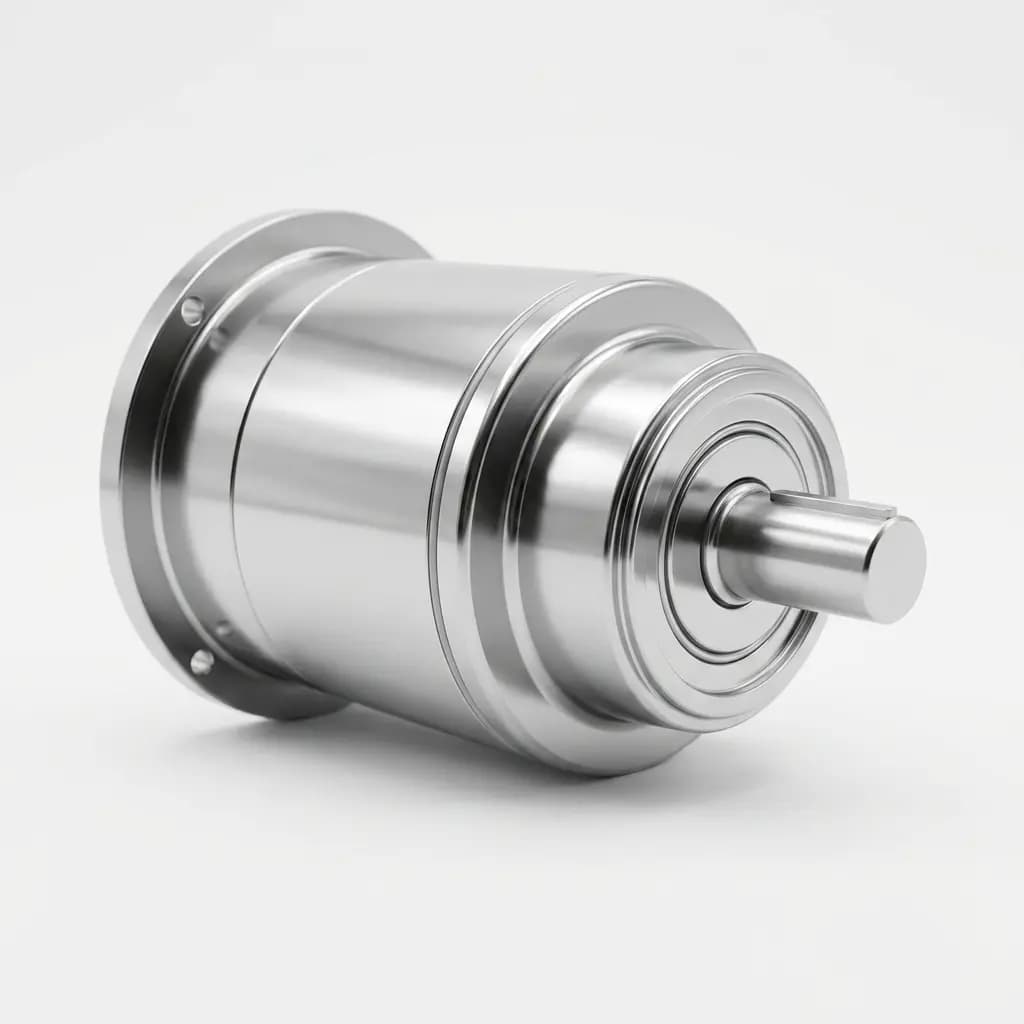
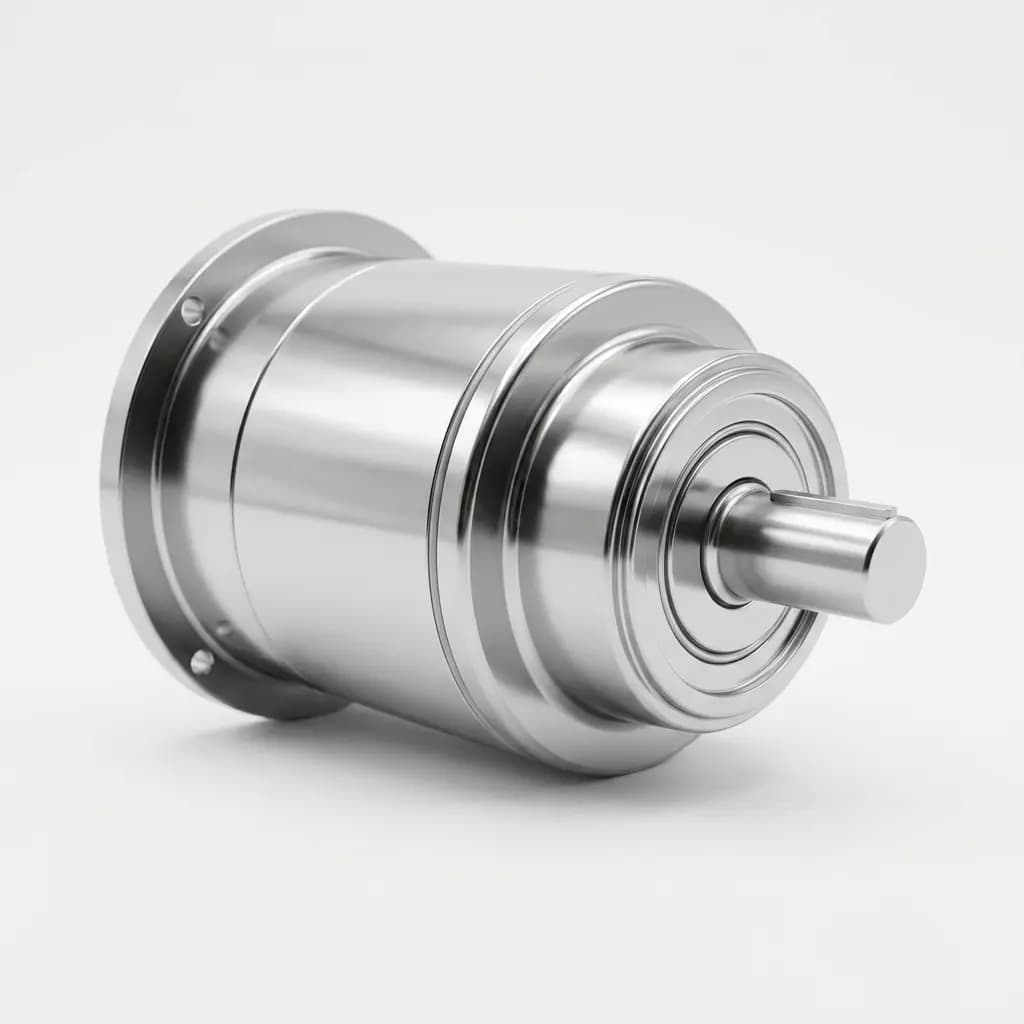
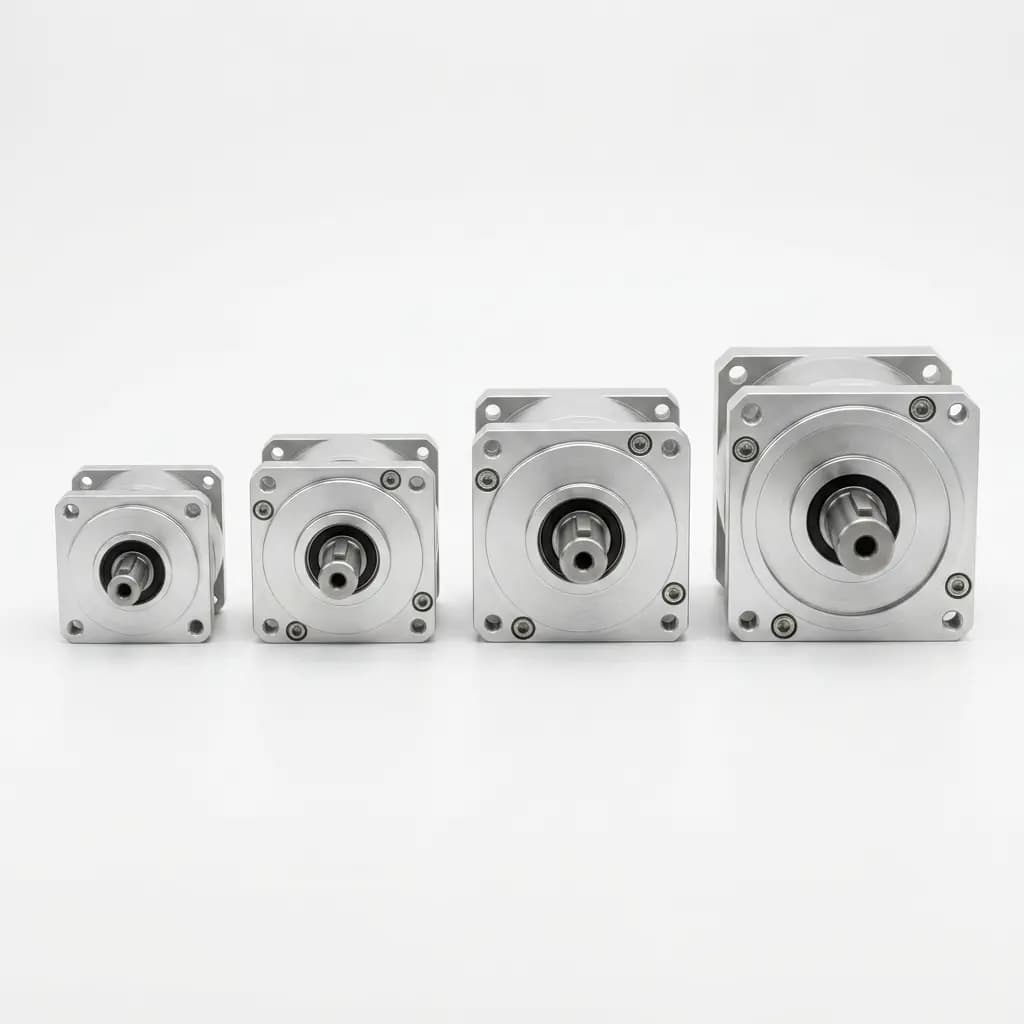
Product illustration: appearance alone does not verify alloy grade, ingress protection or hygienic certification.
The mechanical specification remains equally important. Record the output torque and speed throughout the cycle, starts per hour, reversing events, external shaft loads and permissible backlash. Compare spur planetary gearbox configurations with helical planetary gearbox configurations for motion requirements, then separately confirm whether a specific washdown variant is available. A series-level product page is not evidence that every variant has the same sealing or hygiene approval.
For global projects, have the machine builder and end user identify applicable local requirements. Hygienic design guidance, a lubricant registration and an enclosure IP report answer separate questions. None should be accepted as a blanket approval of the finished machine.
2. Ingress Protection: IP65 vs. IP67 vs. IP69K
IEC 60529 defines enclosure IP classifications, while ISO 20653:2023 addresses electrical equipment on road vehicles. Gearbox suppliers may use tests based on these documents; ask which edition, procedure and acceptance criteria were applied. An ISO test reference does not make a reducer an automotive product or establish chemical cleanability.
IP ratings are not a single ladder of universal washdown resistance. Temporary immersion, powerful jets and hot close-range jets are different exposures. Ask for separate supporting evidence when more than one condition is required. The familiar marketing term “IP69K” should be matched to the complete designation and test standard in the report; do not silently substitute an IEC IP69 claim for an ISO IPX9K test.
Table 1: Six Ingress Designations and What to Request
| Designation | Exposure addressed | What it does not establish | Evidence for the gearbox RFQ |
|---|---|---|---|
| IP65 | Dust-tight enclosure and a defined water-jet test | Hot pressure washing, detergent resistance or immersion | Exact model, interfaces, orientation and permitted cleaning method |
| IP66 | Dust-tight enclosure and a more powerful water-jet test | Close-range hot high-pressure cleaning or chemical endurance | Jet-test report and limits on nozzle use |
| IP67 | Dust-tight enclosure and temporary immersion; commonly a 30-minute test for small enclosures | Resistance to a pressure washer or indefinite immersion | Specimen dimensions, immersion depth, duration and shaft state |
| IP68 | Dust-tight enclosure and immersion under specified conditions | A universal immersion depth or hot-jet approval | Agreed depth, duration, temperature and operating conditions |
| IP69 | IEC high-pressure, high-temperature water-jet classification | Automatic equivalence to every K-suffix test or cleaning chemical | IEC edition, test configuration and acceptance criteria |
| IP69K / IPX9K claim | A supplier claim referring to a K-suffix hot high-pressure jet test; verify the full code | Unlimited cleaning pressure, steam sterilization or a hygienic certificate | Named standard, complete code, tested assembly and operating restrictions |
A laboratory turntable rotating a specimen is not evidence that the gearbox output shaft was driven during the test. Require the report to say whether shafts were stationary or rotating, whether the motor was fitted and whether vents, plugs and cable interfaces were included. Changing an adapter or seal cartridge can change the tested assembly.
There is a practical reason to read the cleaning instructions: the WITTENSTEIN HDV product page pairs its IP69K claim with a maximum 30 bar qualification. That is a limitation for that named product, not a universal test pressure or a limit for other manufacturers. A pressure-washer pump setting also does not fully describe the jet reaching the enclosure; nozzle geometry and distance matter.
3. Thermal Contraction and Potential Seal Ingress
Rapid cooling of a warm gearbox can create a pressure difference across its seals. Water retained near a shaft interface may then have an additional driving force for ingress. This is one possible failure mechanism alongside damaged seal lips, shaft runout, incompatible chemicals, incorrect assembly and direct jet loading. Without teardown records, it should not be described as the dominant cause of field failures.
For a reproducible illustration, assume a fixed volume of dry gas, no leakage and an initial pressure of 1,013 mbar absolute at 348 K, approximately 75°C. Cooling the entire gas volume to 285 K, approximately 12°C, gives:
P2 = P1 × T2 / T1
P2 = 1,013 × 285 / 348 = 829.6 mbar absolute
Pressure difference relative to 1,013 mbar ambient ≈ -183.4 mbar
These are equilibrium ideal-gas calculations, not measurements of a real wash cycle. Gas temperature will lag the housing surface; leakage, headspace volume changes, lubricant expansion, condensation and a vent can alter the result. A pressure difference does not prove that a particular seal will leak.
Illustrative mechanism only. The diagram uses the stated gas assumptions and does not predict water ingress or service life.
Candidate Sealing Measures to Evaluate
Opposed seals with a compatible grease barrier can be useful, but the supplier must approve lip direction, running surface, shaft speed and chemical exposure. “FKM” or “PTFE” is not a complete seal specification: compound formulation, filler, temperature range and counterface condition matter. Adding a second lip can also increase friction and heat.
A pressure-equalizing vent is another possible design choice, not a mandatory feature of all washdown gearboxes. Its membrane, placement and protection need evaluation against detergent wetting, spray impingement and fouling. A liquid-repellent membrane should not be assumed to reject all surfactant-containing cleaners or every chemical aerosol. A sealed design without a vent may be appropriate if the complete assembly is qualified for the pressure and thermal cycles.
For qualification, agree a representative hot-running-to-cleaning sequence with the supplier. Define inspection points, a method for detecting water contamination and acceptable leakage criteria before testing. Also define whether the gearbox is stopped, isolated or allowed to rotate during sanitation; follow machine safety and supplier instructions.
4. Housing Metallurgy: 316L vs. 304 vs. Coated Alloys
Stainless steel removes the need for a protective paint layer, but it is not immune to corrosion. Grade 316L generally offers better resistance to chloride-related localized corrosion than 304; neither grade guarantees survival in hot chloride cleaners, stagnant crevices or concentrated chemical residue. Ask for compatibility with the actual cleaning recipe and for the material certificate of the supplied part.
Do not treat a metal grade as a hygienic zone approval. Suitability depends on the finished surface, fabrication, geometry, chemical exposure and intended use. Direct-contact, splash and non-product areas should be identified on the machine drawing; plant zone numbers vary and must not be assumed to have one global definition.
Table 2: Housing Material and Surface Protection Matrix
| Material or construction | Potential advantage | Main question before approval | Evidence to request |
|---|---|---|---|
| 316L stainless steel | No protective coating needed; useful corrosion resistance | Are the exact cleaner, temperature and crevice conditions compatible? | Material certificate, finish specification and chemical compatibility statement |
| 304 stainless steel | Can suit less aggressive environments | Is chloride exposure or retained residue likely? | Exposure review and documented maintenance limits |
| Higher-alloy stainless steel | May address a specific corrosion problem | Does the selected alloy solve the documented mechanism? | Grade-specific assessment and fabrication controls |
| Electroless nickel-plated alloy | Barrier coating over a machinable substrate | What happens at pores, scratches and damaged edges? | Coating specification, adhesion evidence and inspection/rejection procedure |
| Anodized aluminum | Low mass with a treated surface | Is the anodic layer compatible with the cleaning chemistry? | Treatment details and chemical-exposure evidence |
| Painted or polymer-coated alloy | May suit protected areas or a qualified coating system | Can damage, flaking or under-film corrosion reach product? | Finished-system compatibility, repair limits and contamination-risk review |
For equipment above exposed food, a solid stainless construction is often a practical starting point because it removes coating damage as one failure route. It does not eliminate risks from corrosion debris, fasteners or lubricant leakage. Any coating proposed near product needs an explicit acceptance decision from the responsible hygiene team; this article does not claim a universal ban on coatings or a universal legal requirement for 316L.
Compare total installed cost using equivalent specifications. Include the motor adapter, seals, lubricant, test documentation, cleaning restrictions and replacement access in each quotation. A quoted price difference without those boundaries is not a reliable material-cost comparison.
5. Thermal Derating: Use the Mounted Assembly Rating
Austenitic stainless steels conduct heat less readily than common aluminum housing alloys, but the ratio of their conductivities is not a torque derating factor. Heat transfer also depends on wall thickness, contact resistance, exposed area, airflow, motor heat and conduction into the mounting frame. A well-designed stainless assembly may perform differently from an aluminum unit of another size or mounting arrangement.
Smooth hygienic housings can offer less cooling area than finned industrial housings. Avoid geometry that retains soil or cannot be inspected, rather than assuming every external rib is universally prohibited. The correct question is whether the installed geometry can be cleaned and whether its thermal performance meets the duty cycle.
A Reproducible Heat-Loss Screening Example
Consider an illustrative continuous output requirement of 60 N·m at 120 rpm. If a supplier provides an efficiency estimate of 94% at that operating point, the power balance is:
Output power = torque × 2π × output rpm / 60
             = 60 × 2π × 120 / 60 = 754 W
Input power  = output power / efficiency = 754 / 0.94 = 802 W
Gearbox heat = input power - output power ≈ 48 W
At an assumed 97% efficiency, the same output would produce about 23 W of heat. Neither efficiency is a measured value for a product in this article. The example shows why the supplier's efficiency map and exact seal/lubricant configuration matter; it does not establish allowable temperature, torque or service life.
Table 3: Six Inputs Needed for a Thermal Rating
| Input | What to provide | Why the rating depends on it |
|---|---|---|
| Torque and speed history | Time-stamped output demand, including reversals | Losses and loading vary across the operating cycle |
| Ratio and stage count | Exact candidate configuration | Gear and bearing losses depend on the selected arrangement |
| Lubricant and seals | Product, fill quantity and seal configuration | Viscosity, churning and contact friction affect heating |
| Ambient conditions | Worst-case air temperature and airflow | Cooling capacity changes with the operating environment |
| Mounting and motor | Orientation, adapter, frame contact and motor duty | The frame may remove heat and the motor may add heat |
| Temperature limits | Supplier limits and proposed measurement locations | Housing temperature alone may not represent the hottest component |
Do not apply an invented universal 0.58, 0.70 or 0.75 multiplier to every stainless reducer. If a manufacturer supplies a thermal torque curve, use it with its stated mounting, ambient and duty assumptions. Check continuous thermal capacity separately from peak torque, bearing loads, fatigue life and emergency-stop limits. A duty percentage alone cannot distinguish frequent high-loss starts from long steady running.
See the gearbox thermal management and duty-cycle sizing guide for the broader sizing workflow. For this washdown application, request a model-specific thermal assessment with the cleaning sequence and installed motor included. If thermal capacity is unavailable, leave continuous-duty approval pending rather than converting a mechanical catalog rating into a thermal guarantee.
6. Dynamic Shaft Sealing and Running-Surface Wear
A rotary seal needs a compatible running surface, not simply a stainless shaft. Austenitic stainless steels are not conventionally through-hardened by quenching and tempering in the same way as hardenable alloy steels. Wear still depends on the grade condition, surface treatment, lubricant, seal compound, shaft finish, runout and abrasive contamination.
A seal can develop a groove when contaminants are trapped at its contact track. There is no defensible universal number of operating hours before this happens. Ask the seal supplier for counterface hardness, roughness, lead and runout requirements, and ask the gearbox supplier how these are achieved on the supplied model. Keep output shaft speed distinct from the much higher input speed; surface speed depends on both shaft diameter and rpm.
Candidate solutions include an approved wear sleeve, a hardened stainless running surface or a compatible coating. Each introduces its own interfaces and inspection requirements. A ceramic sleeve is not immune to fracture, mounting damage or every chemical exposure, and does not confer infinite seal life. Request a replaceable seal-track arrangement when downtime and repair access make field service important.
7. Hygienic Mechanical Design and Installation
EHEDG's guideline catalogue is a starting point for selecting the guidance relevant to equipment design, seals, cleaning and installation. Obtain the applicable document and edition for the project. Designing with reference to EHEDG guidance is different from holding an EHEDG certificate for an identified model and configuration.
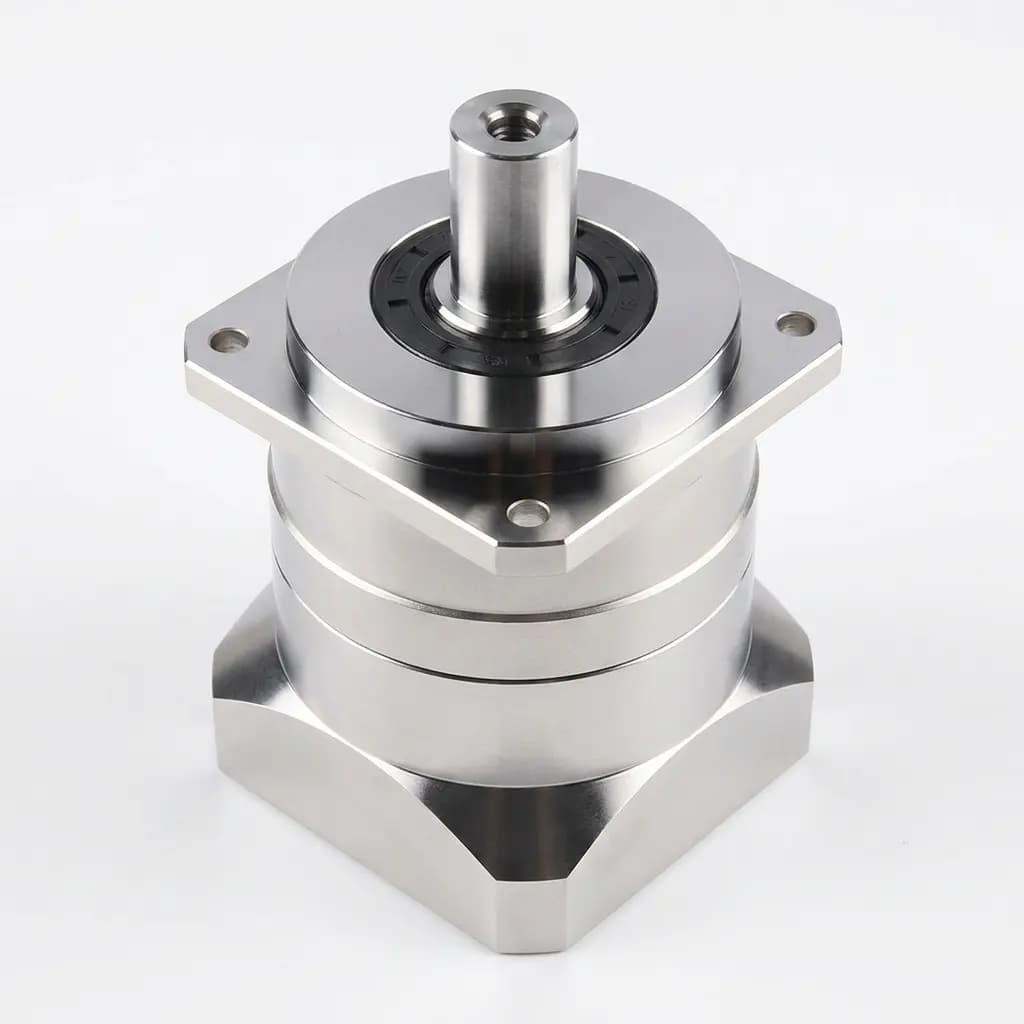
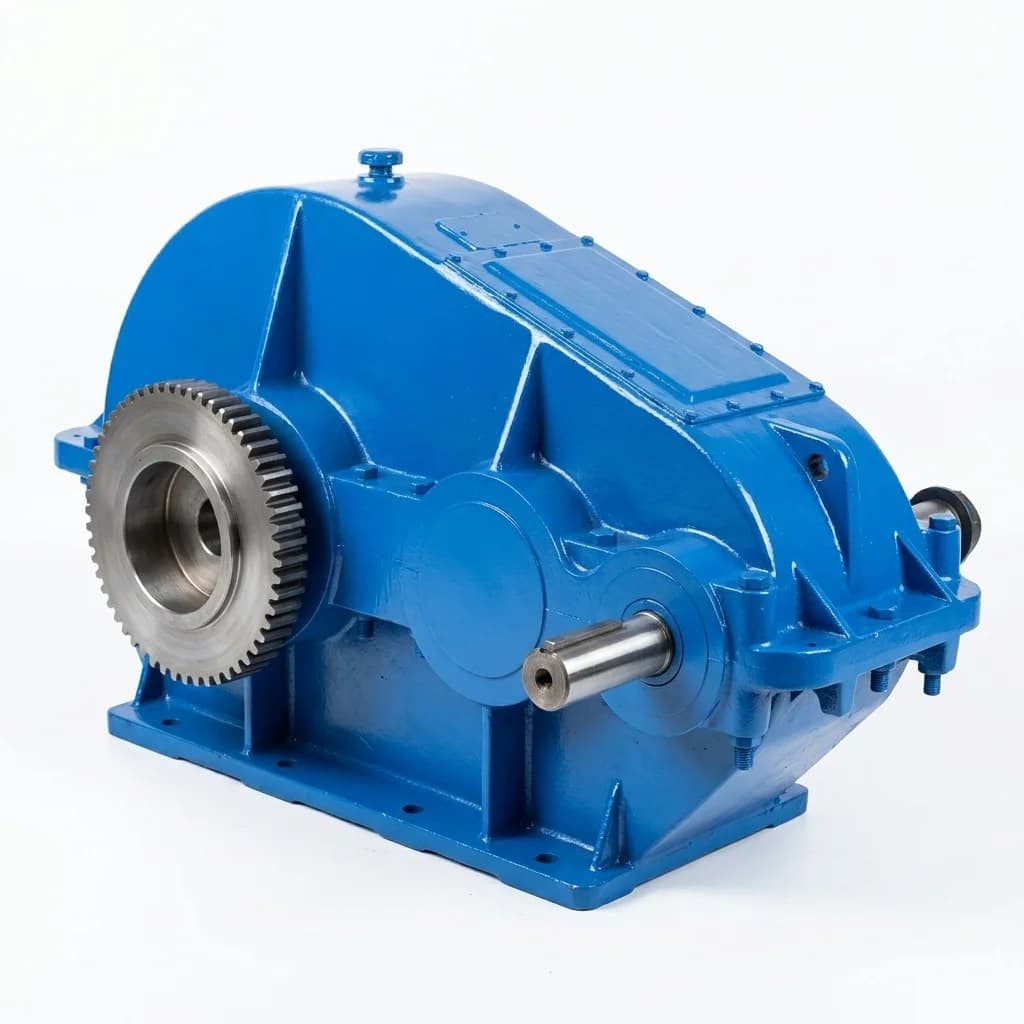
Enclosure illustration, not evidence of cleanability testing or direct food-contact approval.
Review these features on the assembly drawing and on an installed sample:
- Drainage: Avoid retained liquid on housings, adapters and mounting brackets in the actual orientation. A nominal slope on one face does not prove drainage in every mounting direction.
- Joints and fasteners: Evaluate exposed threads, bolt recesses, gasket edges and inaccessible gaps. Hygienic fasteners only help when their seals are correctly compressed and remain cleanable.
- Surface condition: Specify finish and inspection for the relevant surfaces. A roughness target such as Ra ≤ 0.8 µm may be specified for particular product-contact applications, but it is not a universal certification rule for every external gearbox surface.
- Marking and access: Keep identification durable and cleanable. Inspect the motor flange, shaft seal and bracket underside rather than evaluating only the visible housing.
Electropolishing can improve surface condition but does not correct a trapped crevice or establish biological cleanliness. Agree an inspection and cleaning-validation approach for the intended installation. For pharmaceutical equipment, separately establish any sterilization, cleanroom or process-specific qualification; a food-industry hygiene label is not a substitute.
8. Food-Grade Lubrication: What NSF H1 Does and Does Not Mean
NSF explains H1 lubricant registration and ISO 21469 certification. H1 concerns incidental food contact; it does not permit routine lubricant leakage into product. Registration addresses formulation and labelling requirements, while ISO 21469 adds hygiene requirements for lubricant formulation, manufacture and use.
Specify the exact lubricant product and registration identity rather than “food-grade grease” alone. Obtain the gearbox manufacturer's approval for viscosity, load capacity, materials compatibility, temperature range and fill quantity. H1 registration alone does not establish an extreme-pressure test result or impose a universal 5–10% torque penalty. PAO, PAG and grease formulations vary; do not assume all products of one base-fluid family have the same water behavior or are interchangeable.
“Lubricated for life” refers to defined service conditions, not unlimited calendar life under any cleaning regime. Agree inspection triggers for milky lubricant, corrosion, leakage, unusual noise, excess temperature or damaged seals. Set service intervals from the model instructions and actual operating conditions. Neither a fixed 10,000-hour interval nor a universal temperature-doubling rule should replace product-specific guidance. Confirm whether relubrication is permitted before opening a sealed reducer.
9. Copyable Washdown Gearbox RFQ Checklist
Use this checklist to make competing offers comparable. An unchecked item represents missing evidence, not an automatic product rejection. Ask suppliers to identify exceptions explicitly.
- Application and contamination route: State whether the reducer is above exposed food, in a splash area or in a protected non-product area; attach the installation drawing.
- Cleaning procedure: Provide chemicals, concentrations, temperature, contact time, frequency, nozzle pressure and minimum distance; distinguish external cleaning from internal CIP.
- Thermal transition: Record production temperature, wash temperature, shutdown sequence and whether cleaning occurs at standstill.
- Ingress evidence: Name the required tests, standard editions, exact assembly, shaft state and acceptance criteria; include all motor interfaces and vents.
- Housing and finish: Identify grade or coating system, material documentation, finish requirements, corrosion limits and damaged-surface rejection criteria.
- Seals and shaft track: Request compound identification, chemical compatibility, running-surface specification, serviceability and any approved pressure-management arrangement.
- Mechanical sizing: Supply torque-speed history, ratio, radial/axial loads, reversals, peak duration and emergency-stop demand.
- Continuous thermal rating: Obtain the allowable rating for the actual motor, mounting, ambient temperature, duty cycle and lubricant; keep unknown ratings pending.
- Lubricant and hygiene evidence: Record the exact lubricant registration, applicable contact-material declarations and model-specific hygienic certificates if required.
- Precision, interfaces and release: Define backlash measurement conditions, motor dimensions, sample qualification, inspection records, replacement parts and supplier change notification.
Before tightening a backlash requirement, read the planetary gearbox accuracy guide. Backlash, torsional stiffness and positioning repeatability are different acceptance measures. Ask whether the quoted precision applies at commissioning and under what load, temperature and test method.
10. Frequently Asked Questions
Can an IP67-rated planetary gearbox be cleaned with a pressure washer?
IP67 alone is insufficient evidence. It addresses temporary immersion, while a pressure washer applies a jet under different conditions. Obtain a suitable jet-test report and cleaning instructions for the exact assembly. A gearbox may hold several ratings, but they must be documented rather than inferred from IP67.
Does IP69K mean the gearbox is hygienically certified?
No. It is an ingress-related claim that needs its test standard and configuration identified. Cleanability, chemical compatibility, contact-material suitability and hygienic certification require separate evidence. Also check permitted cleaning pressure, distance, temperature and whether the shaft must be stationary.
Is 316L stainless steel mandatory for every food-processing gearbox?
There is no universal requirement established by this guide. Select materials against intended contact, corrosion exposure, local rules and the plant's hygiene specification. Solid stainless can reduce coating-related contamination routes, but 304, 316L and coated systems still need a finished-assembly suitability review.
How much should a stainless gearbox be thermally derated?
There is no universal percentage. Obtain the manufacturer's continuous thermal rating for the selected ratio, speed, lubricant, seals, motor and mounting conditions. A power-loss estimate can help frame the discussion but cannot establish a safe housing temperature or allowable torque without thermal evidence.
Do food-grade lubricants make leaks acceptable?
No. NSF H1 addresses potential incidental food contact, not intentional contamination or unlimited leakage. Identify and correct the leak, follow plant product-control procedures, and use the exact lubricant approved for the reducer. Lubricant registration does not certify the complete gearbox.
Does a heavier stainless housing increase reflected rotational inertia?
A stationary housing adds machine mass without contributing rotating inertia. Rotating components and the external load do contribute. Use the selected gearbox's input inertia and reflect the external load through the ratio as J_load / ratio²; do not count the same inertia twice or assume a particular ratio makes the difference negligible.
11. Engineering Sourcing Summary and Next Steps
Choose ingress evidence for the actual wash process, materials for the actual chemistry and contamination route, and a thermal rating for the installed duty. Then qualify the motor adapter, shaft seals and cleanability together. A housing material, food-grade lubricant or IP label cannot substitute for those assembly-level checks.
For purchasing, separate three decisions: a candidate configuration, a documentation-complete quotation and a sample approved for the intended machine. Record unresolved cleaning or thermal limits before placing a production order. Define which changes to the seal, lubricant, coating, material or adapter require supplier notification and renewed review.
Ready to specify your washdown drive? Send LowBacklashGearbox an application inquiry with the completed checklist, motor part number, output duty and installation drawing. Request confirmation of available configurations, supporting test evidence and any exceptions before approving a model. You can also email [email protected]. Response timing, CAD availability and qualification scope should be agreed for the specific inquiry.
12. Sources and Reference Boundaries
Sources checked on November 5, 2026. The calculations and RFQ framework above are editorial engineering aids; they are not tests performed by these organizations.
- IEC 60529 consolidated edition: Degrees of protection provided by enclosures. Official catalogue identifies the enclosure IP standard. Use the complete applicable edition for test conditions and acceptance requirements.
- ISO 20653:2023: Road vehicles — Degrees of protection (IP code). Official record identifies its road-vehicle electrical-equipment scope. Any use of its tests for a gearbox must be explicit in the supplier report.
- EHEDG Guideline Catalogue. Official entry point for relevant design and cleaning guidance, including GL 8. Catalogue access is not proof of model certification or compliance with every detailed criterion.
- NSF: Food-Grade Lubricants and ISO 21469 Certification. Explains lubricant registration and certification scope; does not establish gearbox load capacity or leakage acceptability.
- WITTENSTEIN: HDV planetary gearbox. Manufacturer example showing that an IP69K claim can be accompanied by a product-specific maximum-pressure qualification. No affiliation, equivalent specification or certification for LowBacklashGearbox products is implied.
Author

More Posts
2026-W20 Industrial Update: Low-Backlash Reducer Sourcing Has Shifted to Classification and Compliance Control
2026-W20 update for low-backlash reducer sourcing: U.S./EU compliance shifts, APAC demand signals, and a buyer checklist for safer servo/stepper substitutions.

The Hidden Cost of Over-Specifying Backlash: A Procurement Guide
A practical July 2026 checklist for deciding when <=1 arc-min backlash is justified, when 3-8 arc-min is enough, and what evidence procurement should request before approving a premium gearbox.
Flange Output vs. Shaft Output Planetary Gearboxes: A Sourcing and Engineering Guide
Compare flange output and shaft output planetary gearboxes. Learn when to pay the premium for flange mounts based on torsional stiffness, space, and BOM costs.