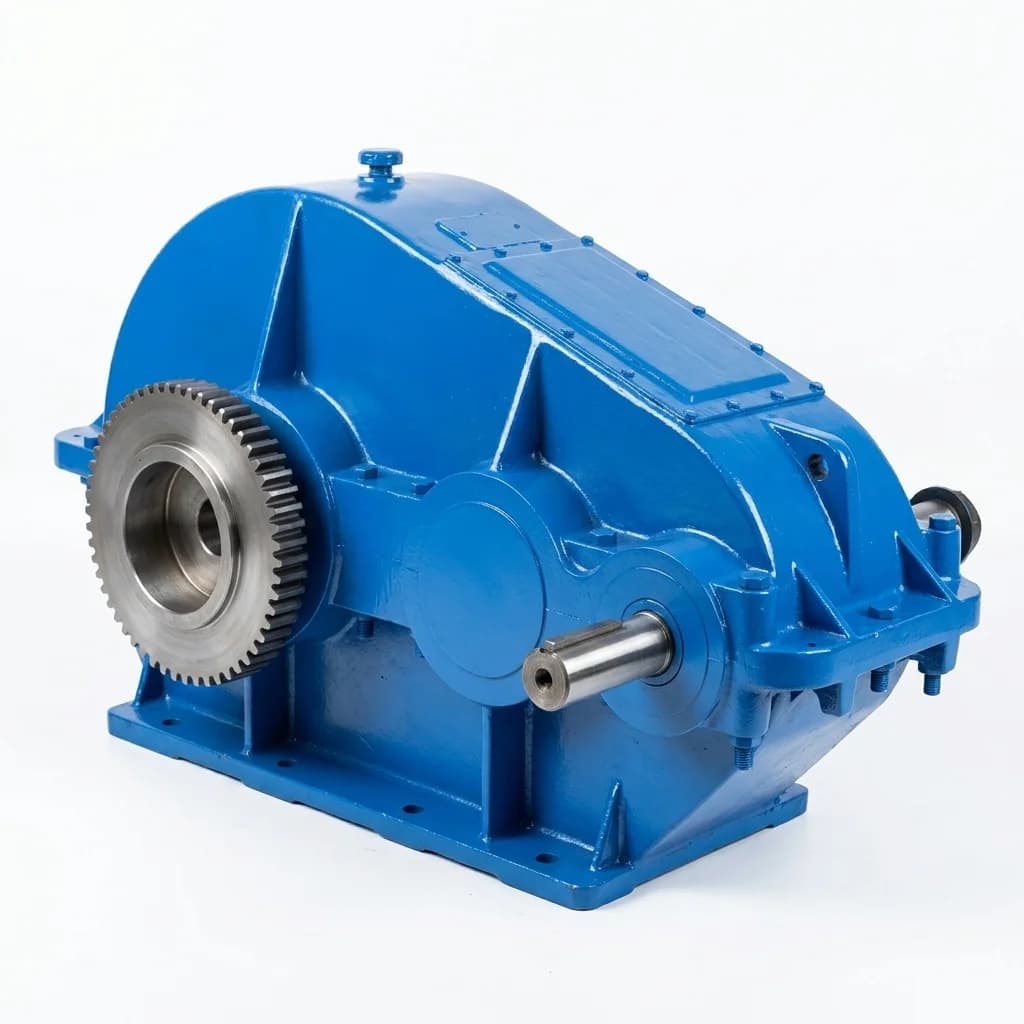
Right-Angle vs. Inline Planetary Gearboxes: A Sourcing and Engineering Guide
Compare right-angle and inline low backlash planetary gearboxes for space, efficiency, backlash, lead time, and BOM cost. Use the sourcing checklist.
Hero Conclusion: Inline planetary gearboxes are the undisputed champions of efficiency, high torque density, and cost-effectiveness. However, as machine footprints shrink and modular automation becomes the standard, right-angle gearboxes are frequently mandated by spatial constraints. Procurement teams must be prepared for a 20-40% price premium and slightly lower efficiency (due to the spiral bevel gear stage), which may occasionally require up-sizing the servo motor. (Last updated: July 25, 2026)
Scope and Limits: This guide is tailored for procurement teams, machine designers, and sourcing engineers tasked with selecting low backlash servo gearboxes for industrial automation, packaging, and robotics. It compares the two fundamental gearbox topologies: Inline (coaxial) and Right-Angle (90-degree). Recommendations apply to high-precision planetary architectures (backlash typically < 5 arc-minutes) and do not cover general-purpose AC induction gearmotors or worm gear drives.
In the highly competitive world of industrial automation, factory floor space is at a premium. Machine builders are under constant pressure to deliver equipment that is faster, more precise, and—crucially—smaller. When designing a new axis of motion, the mechanical envelope often dictates the type of power transmission required.
This brings engineers and buyers to a fundamental crossroads: Should you specify a standard Inline Planetary Gearbox, or do you need a Right-Angle Planetary Gearbox?
While the decision is often treated merely as a mechanical packaging choice, it has profound implications for total Bill of Materials (BOM) cost, system efficiency, thermal management, and long-term reliability. This comprehensive guide dissects the technical and commercial trade-offs between the two architectures, providing a definitive framework for sourcing and selection.
1. The Mechanical Foundation: Understanding the Architectures
Before delving into cost and performance metrics, it is essential to understand what is happening inside the gearbox housing.
The Inline Planetary Gearbox
In an inline (or coaxial) planetary gearbox, the input shaft (connected to the motor) and the output shaft are on the exact same axis. The sun gear is driven directly by the motor, which rotates the planetary gears inside a stationary internal ring gear.
Key Characteristics:
- Symmetric Load Sharing: The load is distributed equally among multiple planet gears (usually 3 or 4), resulting in extremely high torque density.
- Pure Rolling Action: The gear teeth engage with a rolling action, minimizing sliding friction.
- Simplicity: Fewer moving parts and a straight-through design make manufacturing highly standardized.
The Right-Angle Planetary Gearbox
A right-angle planetary gearbox redirects the flow of mechanical power by 90 degrees. To achieve this, engineers cannot rely solely on a planetary gearset. Instead, a right-angle stage—almost universally utilizing spiral bevel gears in high-precision applications—is integrated into the housing, either at the input (motor side) or the output side.
Key Characteristics:
- Direction Change: The 90-degree turn allows the servo motor to be tucked parallel to the machine frame, drastically reducing the overall axial length of the drivetrain.
- Spiral Bevel Stage: This stage introduces a different type of gear meshing, involving a combination of rolling and sliding friction.
- Complex Assembly: The precise shimming and alignment of the spiral bevel gears require specialized manufacturing and assembly techniques.
2. The Space and Packaging Dilemma
The primary reason to endure the higher cost of a right-angle gearbox is mechanical packaging.
In a typical inline setup, the servo motor, the coupling, the gearbox, and the driven shaft are all stacked end-to-end. For a moderately sized axis, this can easily result in a powertrain that protrudes 300mm to 500mm (12 to 20 inches) outward from the machine frame.
In many applications, this is simply unacceptable:
- Autonomous Mobile Robots (AMRs) and AGVs: The wheelbase must be compact. An inline gearbox and motor protruding into the center of the chassis severely limits battery placement and payload capacity. Right-angle gearboxes allow motors to be tucked parallel to the wheels.
- Packaging Machinery: Multi-axis cartesian robots and form-fill-seal machines require dense packing of servo axes to reduce the overall footprint of the production line.
- Gantry Systems: Long protruding motors on the Y or Z axes can cause collisions with safety guarding or other machinery during high-speed travel.
By redirecting the motor by 90 degrees, a right-angle gearbox dramatically reduces the axial footprint, allowing designers to create sleeker, more modular equipment that fits into tighter factory spaces.
3. Commercial Impact: Pricing and Lead Times
For procurement professionals, the differences between these architectures manifest immediately on the quotation and the purchase order.
The Right-Angle Price Premium
Right-angle gearboxes are inherently more expensive than their inline counterparts. Depending on the frame size and the required backlash rating, buyers should expect a 20% to 40% price premium.
This premium is driven by manufacturing complexity:
- Spiral Bevel Gears: Machining, heat-treating, and lapping high-precision spiral bevel gears is a specialized and costly process.
- Bearing Configuration: The bevel stage generates significant axial and radial thrust forces internally, requiring heavier-duty, more expensive bearing configurations (such as tapered roller bearings) to maintain alignment.
- Assembly Labor: Assembling a right-angle gearbox requires meticulous shimming by skilled technicians to establish the correct contact pattern between the bevel gears. Improper shimming leads to noise, heat, and premature failure.
Lead Time Considerations
Inline planetary gearboxes are the highest-volume products for most manufacturers. Consequently, modular components are usually stocked in high quantities, allowing for rapid assembly and delivery (often 1 to 3 weeks).
Right-angle units, due to their specialized bevel stages and lower overall volume, frequently carry longer lead times. Supply chain managers must factor in an additional 2 to 4 weeks when placing blanket orders for right-angle units, and should strictly monitor inventory levels for critical spares.
4. Efficiency and Power Loss: The Hidden Costs
When a mechanical engineer specifies a gearbox, transmission efficiency is a critical variable in the motor sizing calculation. This is where the right-angle architecture introduces significant trade-offs.
Efficiency Ratings
- Inline Planetary Gearboxes excel in power transmission. A single-stage inline planetary gearbox (typically ratios from 3:1 to 10:1) routinely achieves 97% efficiency. The rolling action of the planet gears minimizes frictional losses.
- Right-Angle Gearboxes, conversely, must pass power through the spiral bevel stage. Because the gear teeth mesh with a sliding action rather than a pure rolling action, more energy is lost to friction. A single-stage right-angle gearbox typically maxes out at 93% to 94% efficiency.
The Motor Sizing Domino Effect
A 4% drop in efficiency might sound trivial, but it can trigger a costly domino effect in the bill of materials. If an application is pushing a servo motor to the upper limits of its continuous torque rating, switching from an inline to a right-angle gearbox might cause the motor to overheat.
To compensate for the lower efficiency of the right-angle gearbox, the engineer may be forced to:
- Specify the next size up in the servo motor family.
- Specify a larger, more expensive servo drive (amplifier).
- Increase the size of the power cables and circuit breakers.
Therefore, while the gearbox itself carries a 30% premium, the total system cost might escalate even further if the motor size must be increased.
5. Thermal Management and Lubrication
The energy lost in the spiral bevel stage of a right-angle gearbox does not disappear; it is converted entirely into heat.
In high-speed, continuous duty (S1) applications, right-angle gearboxes run significantly hotter than inline units. This thermal load has direct implications for lubrication life and seal integrity.
- Lubricant Breakdown: High operating temperatures accelerate the degradation of synthetic grease or oil, reducing the gearbox's operational lifespan.
- Seal Wear: Rotary shaft seals degrade faster at high temperatures, increasing the risk of lubricant leakage, which is catastrophic in cleanroom, food, and pharmaceutical applications.
If a right-angle gearbox is strictly required for space constraints, but the application involves continuous high-speed rotation, engineers must closely review the manufacturer's thermal capacity ratings. It may be necessary to up-size the gearbox housing simply to provide a larger surface area for heat dissipation, even if a smaller gearbox meets the torque requirements.
6. Backlash and Precision
Low backlash is the primary reason engineers specify servo-grade gearboxes. Both inline and right-angle architectures are available in high-precision variants, but right-angle units naturally struggle slightly more to achieve ultra-low backlash numbers.
- Inline Units: Can easily achieve < 3 arc-minutes of backlash in a standard precision tier, and < 1 arc-minute in ultra-precision tiers.
- Right-Angle Units: The addition of the bevel gear stage introduces an extra mesh point. Because total backlash is cumulative across all gear meshes, right-angle gearboxes typically have slightly higher backlash ratings (e.g., < 5 arc-minutes for standard precision, < 3 arc-minutes for high precision).
For 95% of automation applications (like packaging, palletizing, and material handling), 5 arc-minutes of backlash is imperceptible. However, for extremely demanding applications (such as high-resolution printing, wafer handling, or long-reach robotic arms where angular error is magnified), the extra backlash of a right-angle unit might be a dealbreaker.
7. Decision Matrix: Inline vs. Right-Angle
To streamline the sourcing and engineering decision process, refer to the following comparative matrix.
| Evaluation Criteria | Inline Planetary Gearbox | Right-Angle Planetary Gearbox |
|---|---|---|
| Mechanical Footprint | Long axial length, protrudes from frame | Compact axial length, motor parallel to frame |
| Typical Efficiency (1-Stage) | ~97% (Highly efficient, rolling mesh) | ~93% (Lower efficiency, sliding mesh) |
| Relative Cost | Baseline (Lowest cost) | 20% - 40% Premium |
| Typical Backlash | < 3 arc-minutes (Standard Precision) | < 5 arc-minutes (Standard Precision) |
| Thermal Performance | Excellent (Minimal heat generation) | Moderate (Bevel stage generates heat) |
| Lead Times & Availability | Fast (High volume, heavily stocked) | Slower (Specialized assembly required) |
| Best Application Fit | Linear actuators, general automation, pick & place | AGV wheel drives, compact robotics, gantries |
8. Sourcing & Engineering Checklist
Before finalizing the purchase order or locking in a machine design, use this checklist to ensure the correct architecture has been selected:
- Space Verification: Have we modeled the actual CAD of the motor + inline gearbox? Is the protrusion definitively causing an interference issue?
- Cost-Benefit Analysis: Does the cost premium of the right-angle gearbox offset the cost of redesigning the machine frame to fit an inline unit?
- Motor Sizing Confirmation: If selecting right-angle, has the mechanical engineer recalculated the required motor torque using 93% efficiency instead of 97%?
- Thermal Limits (S1 vs S5): Is the application continuous duty (S1)? If so, have we verified the nominal thermal torque limits of the right-angle gearbox?
- Backlash Tolerance: Does the slightly higher backlash of the right-angle gearbox impact the positioning accuracy required at the tool center point (TCP)?
- Lead Time Alignment: Has procurement confirmed that the 4-6 week lead time of the right-angle unit aligns with the machine build schedule?
9. Sources and Further Reading
- Neugart, Right-angle gearbox — supplier technical overview of 90-degree gearbox layouts and when a compact right-angle package is selected.
- GAM Enterprises, Right Angle Gearing — application-focused discussion of right-angle gearing options, including bevel and hypoid arrangements.
- Control Engineering, Gearbox selection for servo applications — servo gearbox selection considerations for matching gearheads to motion-control requirements.
- Power Transmission Engineering, Understanding right-angle gear drives — industry reference for right-angle gear-drive principles and trade-offs.
10. Frequently Asked Questions (FAQ)
Q: Can a right-angle gearbox transmit the same amount of torque as an inline gearbox of the same frame size? A: Generally, yes. The planetary stages that handle the final output torque are often identical between the two. However, the nominal torque rating might be slightly de-rated on the right-angle version due to the thermal limitations of the bevel stage. Always check the specific datasheet.
Q: Are right-angle gearboxes louder than inline gearboxes? A: Yes. The sliding friction and complex meshing of the spiral bevel gears typically generate 3 to 5 decibels (dB) more acoustic noise compared to a pure inline planetary gearbox operating at the same speed.
Q: If I use a right-angle gearbox, do I still need a flexible coupling for the output? A: That depends entirely on the output geometry. Both inline and right-angle gearboxes can be purchased with either a traditional cylindrical shaft output, which usually requires a coupling, or a flange output for direct bolt-on mounting. Use the shaft vs. flange output guide to decide whether the output interface creates more risk than the 90-degree architecture itself.
Q: Is it possible to get a right-angle gearbox with 1 arc-minute of backlash? A: Yes, but it is highly specialized and extremely expensive. Manufacturers achieve this through highly selective matching of gears and pre-loading the bevel stage, which dramatically increases the cost and reduces the maximum speed rating of the gearbox.
11. Conclusion: Balancing Space and Cost
The choice between an inline and a right-angle planetary gearbox is rarely a matter of preference; it is dictated by the physical realities of the machine layout.
Inline gearboxes should always be the default choice. They are cheaper, more efficient, run cooler, and are readily available from multiple global suppliers.
However, when space constraints demand it, right-angle gearboxes provide an indispensable solution for modern, compact machine design. By understanding the cost premiums, efficiency losses, and thermal limitations inherent to the right-angle architecture, procurement teams and engineers can specify the correct powertrain without risking late-stage motor up-sizing or premature field failures.
If you are unsure whether your application requires the space-saving benefits of a right-angle unit, or if you want to compare the BOM cost of both configurations, contact our application engineering team today. We can run a side-by-side performance and cost analysis to ensure you are sourcing the optimal solution for your automation project.
Author

More Posts
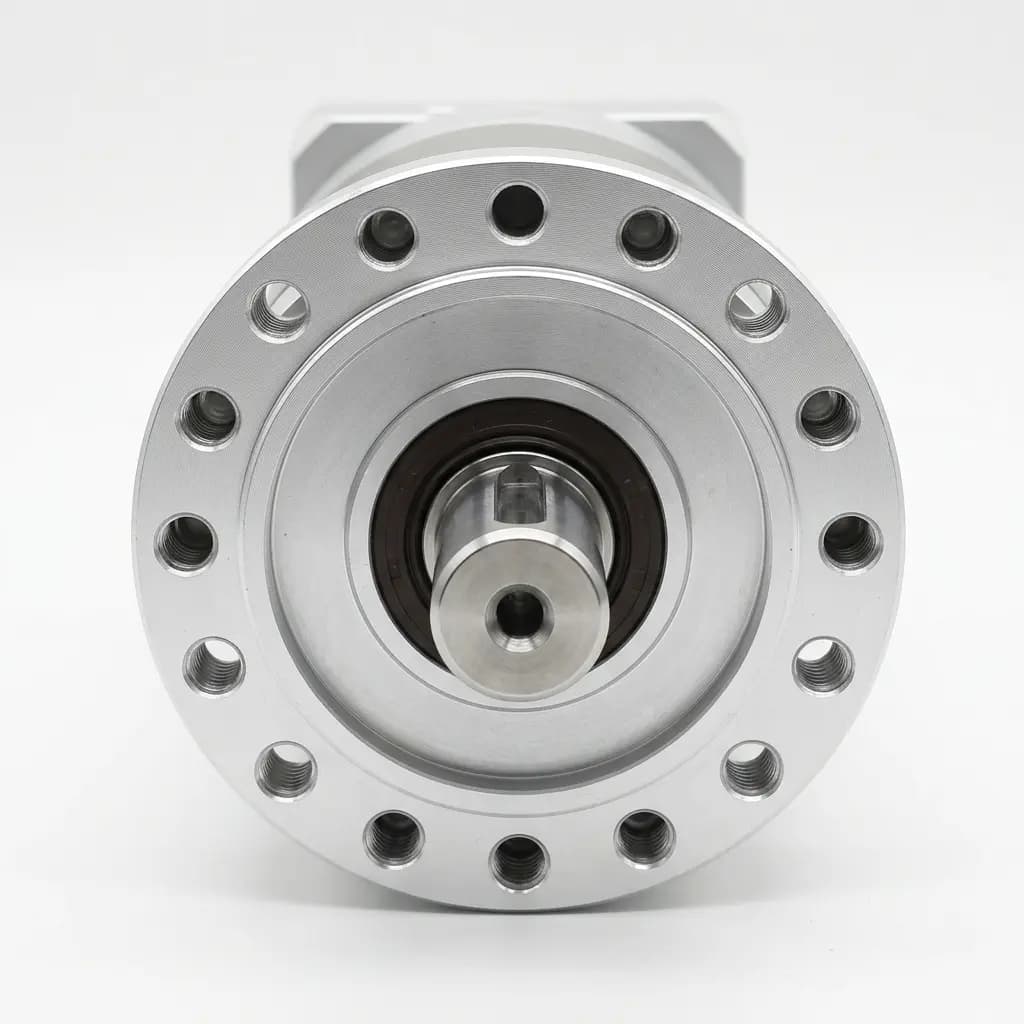
Low-Backlash Reducer Update: Zero-Backlash AMR Gate
Use this 2026-W23 low-backlash reducer update to compare planetary, cycloidal, and AMR drive substitutes across US, EU, and APAC sourcing risks.
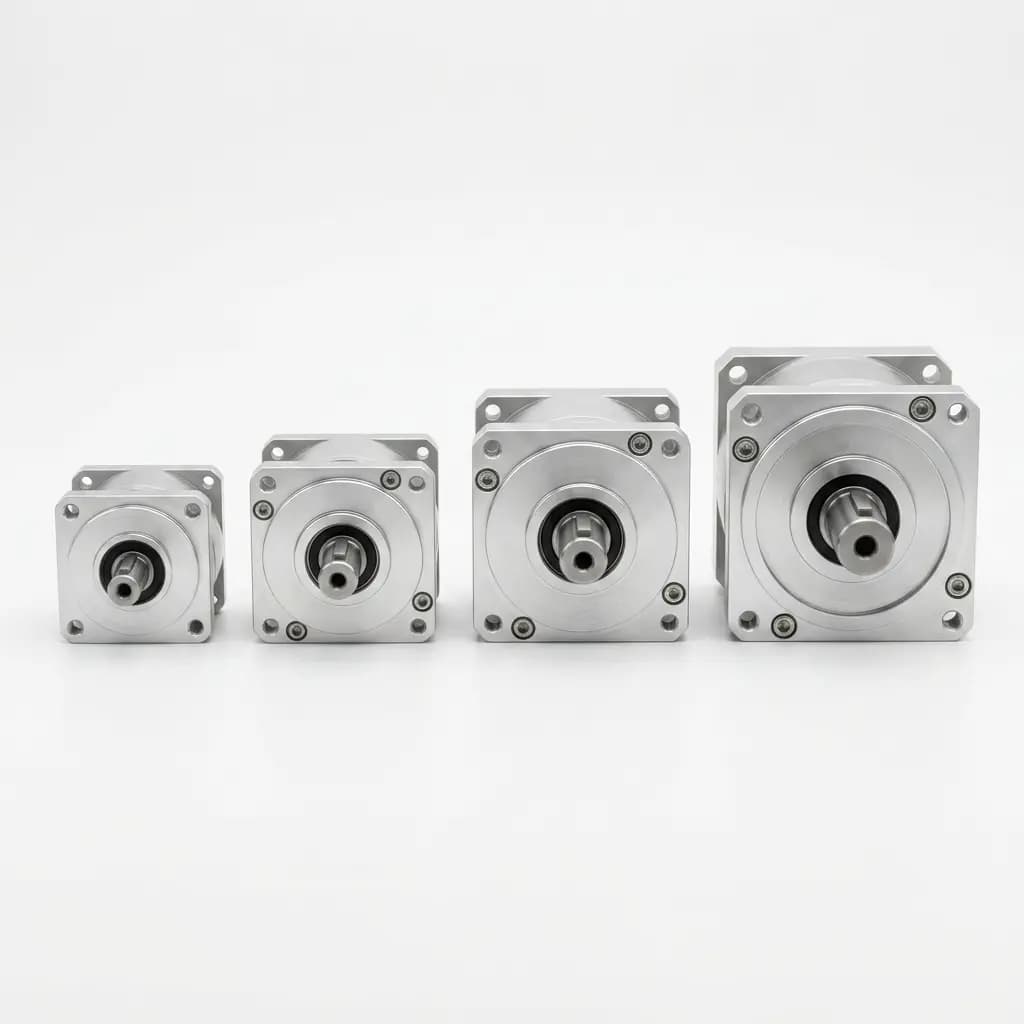
How to Safely Second-Source and Cross-Reference Low Backlash Planetary Gearboxes
Validate dimensions, torque, stiffness, duty cycle, and supplier risk before approving a second-source low backlash planetary gearbox replacement in 2026.
Specifying Low Backlash Gearboxes for AGV and AMR Wheel Drives
Choose low backlash gearboxes for AGV/AMR wheel drives with a 2026 checklist for radial loads, shock ratings, bearings, backlash, and RFQ review steps.